About
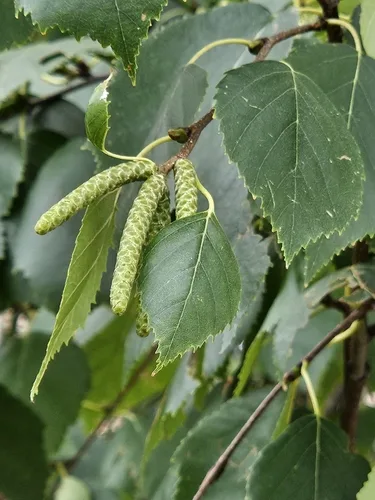
Paper birch (Betula papyrifera) is a northern tree known for chalk-white exfoliating bark, triangular leaves with long tips, and slender catkins. It colonizes burns, cutovers, and lake shores, often growing 15 to 25 meters (50 to 80 feet) with a narrow crown in dense stands. Sap can be tapped for beverage use where traditions support sustainable harvest. It suits short-rotation coppice trials, wildlife corridors, and ornamental plantings in cool, humid climates with cold winters. Full sun to partial shade; cool, moist, well-drained acidic soils favor health. Bronze birch borer risk increases when trees are heat-stressed at the southern edge of range. Sow seed on mineral soil in spring, or plant container liners. Avoid deep planting that buries root flare. Collect sap on warm late-winter days in regions where tapping is practiced; prune during dormancy to reduce pest entry points.
Permaculture Functions
- Wildlife Attractor: Seeds feed finches; bark hosts insects for woodpeckers -- retain snags where safe after mortality for cavity nesters.
- Mulcher: Leaf litter breaks down quickly, feeding soil mesofauna -- pairs with acid-tolerant understory for closed-loop nutrient cycling.
- Erosion Control: Fibrous roots stabilize moist, sandy banks -- useful on lake edges where ice scour selects pioneer species.
- Ornamental: White bark provides winter interest -- underplant with low shrubs that tolerate light shade and acidic pH.
- Dynamic Accumulator: Birch tissues cycle minerals from subsoil -- leaf litter returns them to surface organic horizons.
Companion Planting
Threats & Pressure
- Japanese Beetles
- Aphids
- Tent Caterpillar
- Tent Caterpillars