About
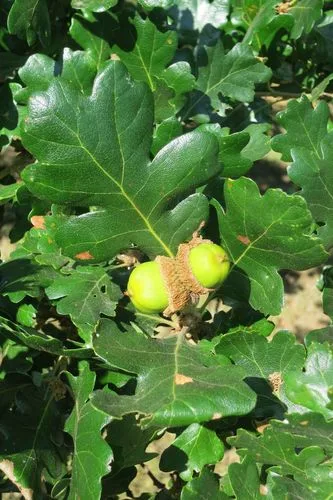
Oregon white oak (Quercus garryana) is a slow-growing, long-lived tree of Pacific Northwest dry prairies and savannas, with broad, rounded crowns and deeply lobed leaves that turn tawny in autumn. Acorns mature in one season and feed diverse wildlife. Trees often reach 15 to 25 meters (50 to 80 feet) in open sites but remain shorter in harsh soils. It anchors oak savanna restoration, livestock silvopasture, and fire-adapted food forests where summer drought is moderated by marine influence. Full sun develops wide crowns; deep, well-drained soils support longevity, while shallow rocky sites produce gnarled, picturesque forms. Grow from acorns sown immediately after fall collection; protect from rodents with wire covers. Transplant small seedlings while taproots are manageable. Harvest acorns for food only from known-safe populations and after leaching tannins per traditional processing. Monitor for sudden oak decline issues in regions where pathogens occur.
Permaculture Functions
- Wildlife Attractor: Acorns feed mammals and birds; cavities provide nest sites in old trees -- retain snags where safe for structural habitat.
- Erosion Control: Deep roots stabilize slopes in seasonally wet, winter-dry climates -- pairs with native grasses that tolerate shade as canopy closes.
- Mulcher: Leaf litter feeds fungal soil webs -- supports spring ephemerals adapted to oak shade and moisture pulses.
- Shade Provider: Open canopy allows understory shrubs -- design for dappled light that matches camas and other savanna associates.
- Dynamic Accumulator: Oak tissues cycle calcium and micronutrients -- leaf litter recycles to surface soils for tolerant plants.
Companion Planting
Threats & Pressure
- Aphids
- Tent Caterpillar
- Scale Insects
- Tent Caterpillars