About
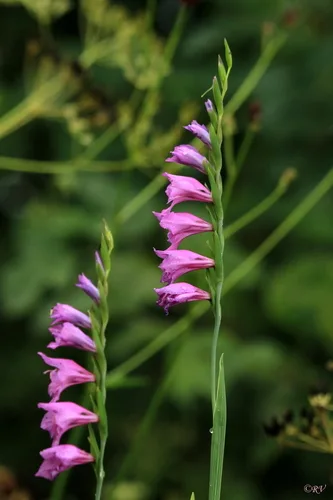
Marsh gladiolus (Gladiolus palustris) is a European wetland species with narrow leaves and spikes of pink to magenta flowers in early summer. Plants arise from corms in saturated acidic soils of fens and sedge meadows, typically 40 to 80 cm (16 to 32 inches) tall. It is valued in garden design for authentic moist-prairie and pond-edge plantings in cool summer climates. It fits constructed rain gardens, liner ponds with seasonal drawdown, and habitat restorations where water levels fluctuate but winter cold remains reliable. Site in full sun with roots in moist humus; do not let corms sit anaerobic year-round. Winter chill helps dormancy in continental climates. Plant corms in late winter or early spring in pots, then move to the water margin after frost. Divide every few years to prevent crowding and bloom decline. Cut flowers sparingly for arrangements; leave plenty for pollinators and seed set if naturalizing is desired.
Permaculture Functions
- Ornamental: Slender floral spikes add vertical rhythm at pond toes -- pairs with sedges and rushes for layered wetland texture.
- Pollinator: Open funnel flowers feed long-tongued bees -- timing aligns with early summer warmth before midsummer heat peaks.
- Wildlife Attractor: Seeds feed finches if heads remain; wet habitat supports amphibians nearby -- integrate with emergent aquatics for food web depth.
- Erosion Control: Fibrous roots stabilize organic soils at waterlines -- reduces slumping where wave action is gentle.
- Ground Cover: Clumping bases exclude annual weeds in wet beds -- manageable spread compared to rhizomatous invasives.
Companion Planting
Threats & Pressure