About
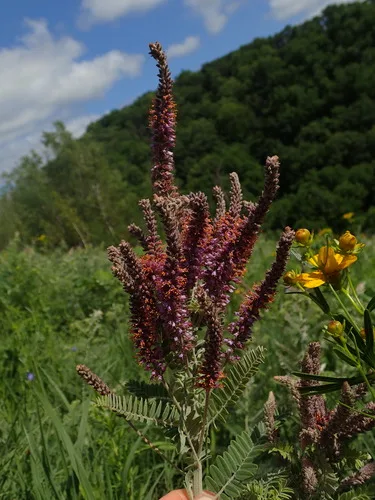
Leadplant (Amorpha canescens) is a deep-rooted prairie legume with silvery compound leaves and slender spikes of purple-blue flowers in midsummer. Plants are typically knee- to hip-high, slow to establish from seed because of long taproots, but extremely drought-tolerant once anchored. It is a signature species of high-quality dry prairies across central North America. It fits meadow restorations, orchard alley rows, and erosion-control mixes on sunny slopes where periodic fire or mowing replaces missing grazers. Full sun on lean, well-drained soils matches its ecology; rich irrigation invites lush competitors that shade it out. Scarify seeds or treat with hot water, then sow in fall outdoors or stratify for spring. Container plugs transplant best when young before taproots coil. Cut back dormant stems in late winter if aesthetics require; leave standing for overwintering insects when possible. Avoid heavy nitrogen fertilizer that favors grasses over legumes.
Permaculture Functions
- Nitrogen Fixer: Root nodules house rhizobia adapted to dry prairies -- supplies plant-available nitrogen to neighbors without synthetic inputs.
- Pollinator: Nectar-rich spikes attract native bees and butterflies during midseason heat -- timing overlaps with coneflowers and grasses.
- Wildlife Attractor: Seeds feed game birds; foliage hosts caterpillars of specialist insects -- integrate into wildlife corridors between forest patches.
- Erosion Control: Deep roots stabilize sand and gravel slopes -- useful on reclaimed sites where topsoil is thin.
- Dynamic Accumulator: Deep mining of nutrients supports chop-and-drop when paired with species that tolerate leaf litter chemistry -- test pairings before large plantings.
Companion Planting
Threats & Pressure