About
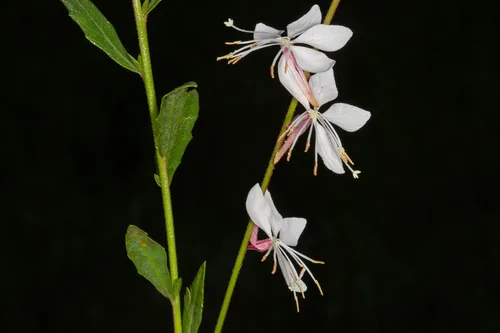
Gaura (*Oenothera lindheimeri*, long sold as *Gaura lindheimeri*) is a clump-forming perennial from the southern Great Plains with wiry stems, butterfly-like white to pink flowers, and narrow leaves that can redden in stress. Mature plants reach 2–4 feet tall and wide, swaying in wind. In subtropical and tropical Americas it flowers heavily during drier, sunnier months; heavy wet-season humidity can shorten lifespan—plant on berms with air movement and avoid overwatering. Full sun for strongest stems and bloom. Well-drained, lean to average soil; drought-tolerant once established. Wet feet in the warm rainy season leads to crown rot—gravel mulch helps. Seeds: Sow in warm conditions; some cultivars come partly true from seed. Spring divisions: Split crowns before major new growth; replant shallowly and water lightly until rooted. Cut stems for long-lasting airy bouquets when half the buds are open. Deadheading prolongs bloom on some selections; allow late seed if you want self-sowing volunteers.
Permaculture Functions
- Ornamental: Oenothera lindheimeri butterfly-wing white-pink blooms on wiry stems sway two to four feet to soften hardscape beside gravel mulch modernist entries -- where bold-leaf tropicals would look pasted onto Texas Hill Country wrong.
- Pollinator: Evening primrose family nectar feeds sphinx moths after dark -- while honeybees work same racemes mornings on drained berms in zone 5-9 rows you planted with air movement to dodge wet-season crown rot on heavy clay toes.
- Wildlife Attractor: Malformed gaura seed capsules still feed juncos -- when stems stand into snow line on Texas provenance plantings if autumn shear skipped so birds get calories your tidy impulse would have thrown in the chipper pile.
- Border Plant: Upright airy masses edge xeric rock gardens without colonizing neighbors via deep taproot -- that only sparingly suckers on dry rain-garden shoulders between two-inch gully washers you already documented with rain gauge photos.
- Erosion Control: Fibrous crowns hold decomposed granite slopes on Austin green roof test plots -- where summer drought alternates with gully washers that would have washed unrooted pea gravel into downspout filters you clean each spring.
Threats & Pressure