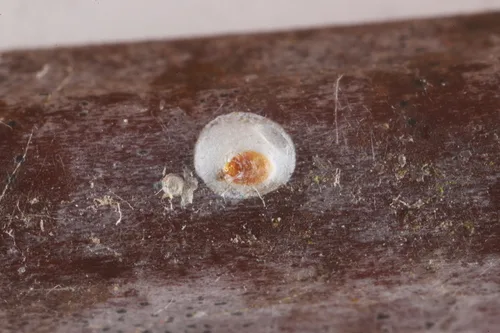
Field Identification
White peach scale is a diaspidid armored scale that forms dense white covers on bark and sometimes fruit of stone fruit, pome fruit, and many ornamentals. Heavy infestations cause limb dieback and reduce fruit finish. Crawlers spread to new wood in multiple generations per year in warm climates. It is a global pest wherever hosts are grown in temperate through subtropical orchards and landscapes.
Adults appear as small white angular covers flush with bark, often in clusters. Use a lens to see the settled crawler stage after tape monitoring. Distinguish from other white armored scales using host and cover shape keys from extension. Check both sides of scaffold limbs because populations start in protected angles.
Not sure what you have? Use the symptom diagnosis tool →
How to Deal With It
Organic Control Methods
Encarsia and Aphytis spp. parasitoids attack white peach scale in integrated orchards when ant interference is low. Lady beetles such as Chilocorus feed on crawlers. Preserve flowering groundcovers in orchard alleys. Avoid broad-spectrum dormant oil plus insecticide mixes that overshoot and crash parasitoids if your program does not require them.
Prune out localized hot spots on young trees before spread. Manage ants on trunks. Inspect nursery trees for scale covers before planting new blocks. Avoid dust on orchard roads that interferes with predator movement.
Open canopy interiors slightly for spray penetration if dormant applications are part of your plan. Remove suckers that harbor dense colonies at the base. Replace chronically infested ornamental hedges when design allows.
Power wash at gentle settings on smooth bark only when extension guides say it is safe for your species. Scrape small areas on young trunks with plastic tools -- avoid bark tearing.
Dormant horticultural oil reduces overwintering populations on tolerant species when temperature rules are followed. Summer narrow-range oils timed to crawlers hit exposed stages. Insecticidal soap is secondary on smooth bark. Rotate strategies across years to avoid selecting resistant scale strains where that risk exists.
Let Nature Handle It
Natural Enemies
- Parasitic Wasps
- Ladybugs
- Predatory Beetles