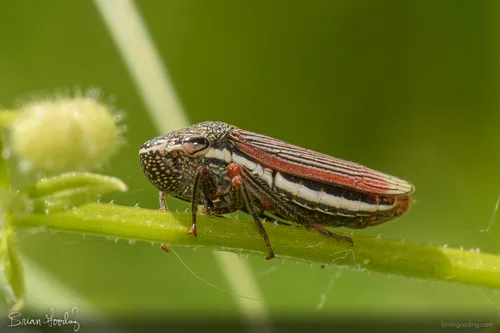
Field Identification
Treehoppers are bizarrely shaped hemipterans that often sit motionless on stems, sometimes in maternal groups guarding egg masses. They pierce phloem and excrete honeydew that grows sooty mold. Most species are minor alone, but dense aggregations can stress young shoots on legumes, orchard trees, and ornamentals from tropical to temperate climates.
Adults have a helmet-like pronotum that can mimic thorns -- use a lens to see the beak and wing pads. Nymphs cluster around females on some species. Ants often tend treehoppers for honeydew, which should clue you to look up the stem. Beat branches over a tray to confirm density.
Not sure what you have? Use the symptom diagnosis tool →
How to Deal With It
Organic Control Methods
Parasitoids attack treehopper eggs and nymphs in diverse systems. Spiders and assassin bugs prey on exposed stages. Reducing ant tending improves predator access. Avoid killing all wasps indiscriminately -- many are parasitoids.
Inspect nursery liners for ant highways and hopper clusters before planting. Avoid excessive nitrogen flushes that favor huge nymph cohorts. Manage dust on roadside plantings so predators remain effective.
Prune out localized aggregations on small shrubs. Wash honeydew-coated leaves with plain water in morning. Replace chronically ant-tended hedge species when design allows.
For houseplants, wipe stems with soapy cloth to remove clusters. High-pressure water knocks nymphs off sturdy outdoor shoots when repeated a few days apart.
Insecticidal soap and horticultural oil work on exposed nymphs with thorough coverage. Neem suppresses feeding on a schedule. Spray at dusk to reduce beneficial contact. Avoid open flowers when bees are working.
Let Nature Handle It
Natural Enemies
- Parasitic Wasps
- Assassin Bugs
- Spiders