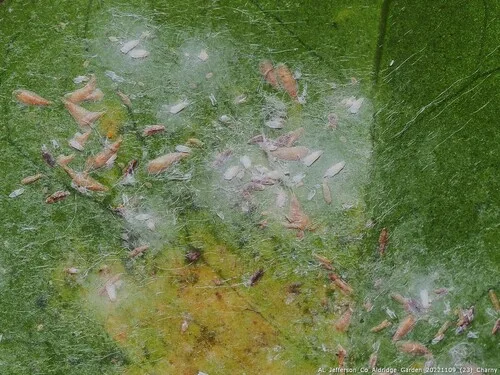
Field Identification
Tea scale is a small armored scale that infests the underside of camellia, holly, and many other evergreen leaves, causing yellow speckling visible from above and premature leaf drop when heavy. Males are narrow and white; females are darker and broader under cover. It thrives in humid subtropical to warm temperate landscapes and greenhouse collections.
Inspect leaf undersides with a lens -- the scale covers look flat and varied in color by sex and age. Distinguish from false oleander scale and other diaspidids using extension keys for your host. Crawlers move to fresh flush in warm months -- use tape traps on twigs to time oil applications.
Not sure what you have? Use the symptom diagnosis tool →
How to Deal With It
Organic Control Methods
Aphytis parasitoids attack tea scale in some regions when ant tending is low. Lady beetles such as Chilocorus feed on crawlers. Preserve flowering shrubs nearby for adult parasitoid nutrition. Avoid broad-spectrum sprays during crawler peaks.
Inspect nursery camellias before purchase. Rinse dust from leaves periodically so predators can walk surfaces. Manage ants on trunks with barriers or labeled baits where appropriate. Do not over-fertilize into ultra-succulent flush during known crawler windows.
Prune interior branches to improve spray penetration if treatment is necessary. Remove the most infested lower canopy on specimen plants to lower reinoculation. Replace chronically infested cultivars with less susceptible selections when collectors allow tradeoffs.
Scrub small plants with soft brushes and soapy water on cool mornings. Power rinse at gentle settings on waxy leaves only if your cultivar tolerates it -- test first.
Horticultural oil timed to crawlers is the standard organic approach on many labels. Narrow-range summer oils need temperature windows. Insecticidal soap helps when coverage reaches undersides completely. Rotate oil and soap weeks apart rather than stacking unknown mixes.
Let Nature Handle It
Natural Enemies
- Parasitic Wasps
- Ladybugs
- Lacewings