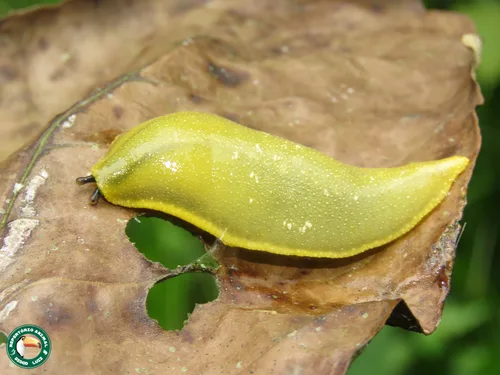
Field Identification
Leatherleaf slug is a large tropical leatherleaf slug introduced in parts of the subtropical Americas where it damages seedlings, salad greens, and ornamentals at night. It leaves wide slime trails and ragged holes unlike narrow trails of small glass snails. It tolerates humidity and sheltered microclimates under pots, debris, and dense groundcovers. Populations spike after wet spells and warm nights.
Adults are mottled brown-gray with a leathery mantle covering much of the dorsum and no external shell. They move slowly compared with jumping snails when disturbed but are larger than most garden slugs in their range. Daytime searches under flats and boards find resting individuals. Egg masses are gelatinous strings or clusters in damp media.
Not sure what you have? Use the symptom diagnosis tool →
How to Deal With It
Organic Control Methods
Ground beetles, firefly larvae, and nematodes labeled for mollusks in applicable regions reduce numbers at the soil surface. Birds scratch mulch seeking slugs when populations are high. Encourage diverse groundcover that supports predators without keeping humidity extreme against structures.
Water in the morning so beds dry before night feeding peaks. Elevate pots on mesh stands with smooth legs. Remove debris piles against foundations. Inspect tropical nursery stock for egg masses before bringing plants into clean greenhouses.
Hand pick during two consecutive evening walks after rain -- leatherleaf slugs are easy to spot with a headlamp. Iron phosphate bait labeled for organic use works when scattered thinly per label -- avoid piles that pets could treat as food. Diatomaceous earth bands help on dry nights on raised beds.
Copper tape on greenhouse benches deters climbing when kept shiny. Beer traps catch some adults but also pull slugs from neighboring areas -- place judiciously. For small starts, cloche or row cover with soil-edge sealing excludes adults when vents are closed at dusk.
Iron phosphate remains the primary organic bait strategy. Soap drenches flush slugs to the surface for hand removal more than for reliable kill. Avoid salt and ammonia home recipes near plants. Neem targets chewing insects more than large slugs -- prioritize habitat drying and bait.
Let Nature Handle It
Natural Enemies
- Ground Beetles
- Nematodes
- Birds