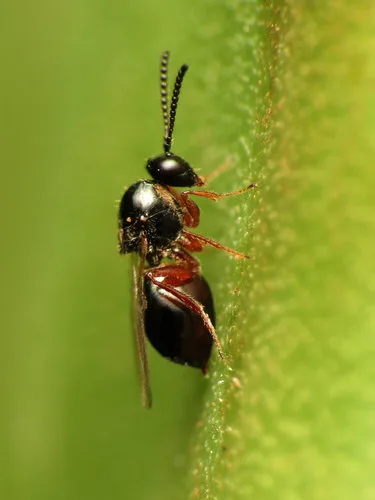
Field Identification
Gall wasps are tiny hymenopterans whose larvae trigger abnormal plant growths called galls on oaks, roses, hickories, and other hosts. Most galls are cosmetic, but heavy loads on young trees can reduce growth and twig dieback occurs when galls cluster at shoot tips. Adults are short-lived and often hard to spot; damage is diagnosed from the gall itself. They occur wherever host trees grow from cool temperate oak savannas to subtropical landscapes.
Match gall shape and position on the plant to extension keys -- spangles on leaves differ from stem swellings on twigs. Cut an active gall in the growing season to find a pale larva or pupal cell inside. Distinguish from bacterial crown gall (rough, soil-line) and from mite erinea. Note whether exit holes are present, which indicates parasites or the previous generation has already emerged.
Not sure what you have? Use the symptom diagnosis tool →
How to Deal With It
Organic Control Methods
Parasitic wasps in families such as Torymidae and Ormyridae attack cynipid larvae inside galls, often leaving a cluster of smaller exit holes. Birds peck papery galls for protein in winter. Preserve native plant diversity near oak plantings so parasitoid complexes stay intact. Avoid spraying oaks during spring adult flights unless a separate pest truly warrants it.
Choose tree species and provenances known to resist the worst local gall complexes when planting large blocks. Avoid over-fertilizing young oaks, which sometimes pushes extremely succulent growth that certain gall wasps favor. Inspect nursery liners for galled twigs before planting. Space trees so airflow reduces secondary stress on galled shoots.
Prune and destroy localized galled twigs on small ornamentals before larvae complete development -- bag debris. Rake and remove fallen leaves that host decomposer generations for species with complex lifecycles where extension guides recommend it. For rose mossy-root galls, prune below the gall and disinfect tools between cuts.
Physical removal of individual large galls on shrubs is possible when few. Banding sticky traps on trunks does not intercept flying adults meaningfully. For high-value bonsai, wire brush is not advised -- prefer pruning.
Sprays rarely reach larvae sealed inside galls, so focus effort on pruning and tree vigor. Horticultural oil is not a standard gall wasp fix. If secondary borers invade weakened wood, address those separately with arborist guidance. Document populations over years before committing to intensive interventions on native oaks where galls are natural.
Let Nature Handle It
Natural Enemies
- Parasitic Wasps
- Birds
- Predatory Beetles