About
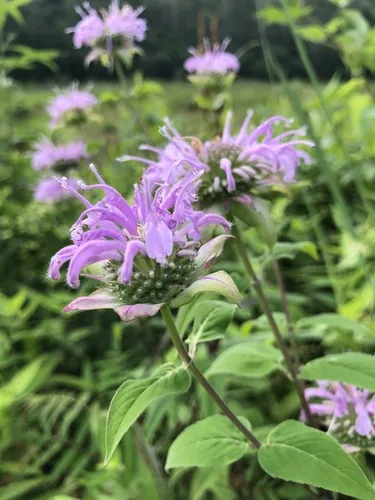
Wild bergamot (Monarda fistulosa) is a fragrant perennial of North American prairies and open woods, with lavender tubular flowers in rounded clusters atop square stems usually 2–4 feet (60–120 cm). It feeds long-tongued bees, hummingbird moths, and hummingbirds where ranges overlap. Leaves smell like oregano’s wild cousin—use that fact in teas and pest-confusion sprays where ethics and ID align. Full sun to light partial shade; best flowering with good light and airflow. Average to slightly moist, well-drained soils suit it; tolerates clay if drainage moves. Avoid overhead evening watering in humid climates. Divide clumps in spring; sow seed with cold stratification. Cut back after flowering to refresh foliage. Harvest leaves and flowers for teas when blooms are active—follow vetted guidance. Peak bloom tracks mid-summer heat.
Permaculture Functions
- Pollinator: Monarda fistulosa heads are whorls of narrow lavender tubes that release nectar only after bees push past exerted stamens -- hummingbird moths and migrating hummingbirds work the same heads in humid evenings when daytime bee traffic slows.
- Medicinal: Thymol- and carvacrol-rich leaf tea is traditional for sweat-inducing cold protocols and topical fungal washes -- high volatile oil means pregnancy limits and skin photosensitivity follow the same rules as oregano oil concentrates.
- Wildlife Attractor: Seed nutlets linger into January on stiff stalks for juncos along prairie edges -- hollow stems also shelter cavity-nesting native bees if you cut some clumps at eighteen inches (45 cm) in rotation each March.
- Ornamental: Lavender lipped bracts read graphic from ten feet (3 m) back in matrix plantings with little bluestem -- mildew shows as white powder on lower leaves in stagnant air, so spacing reads as both aesthetics and disease prevention.
Companion Planting
- Powdery Mildew — improve spacing and morning watering discipline
- Strong aroma divides households—site seating deliberately
Threats & Pressure