About
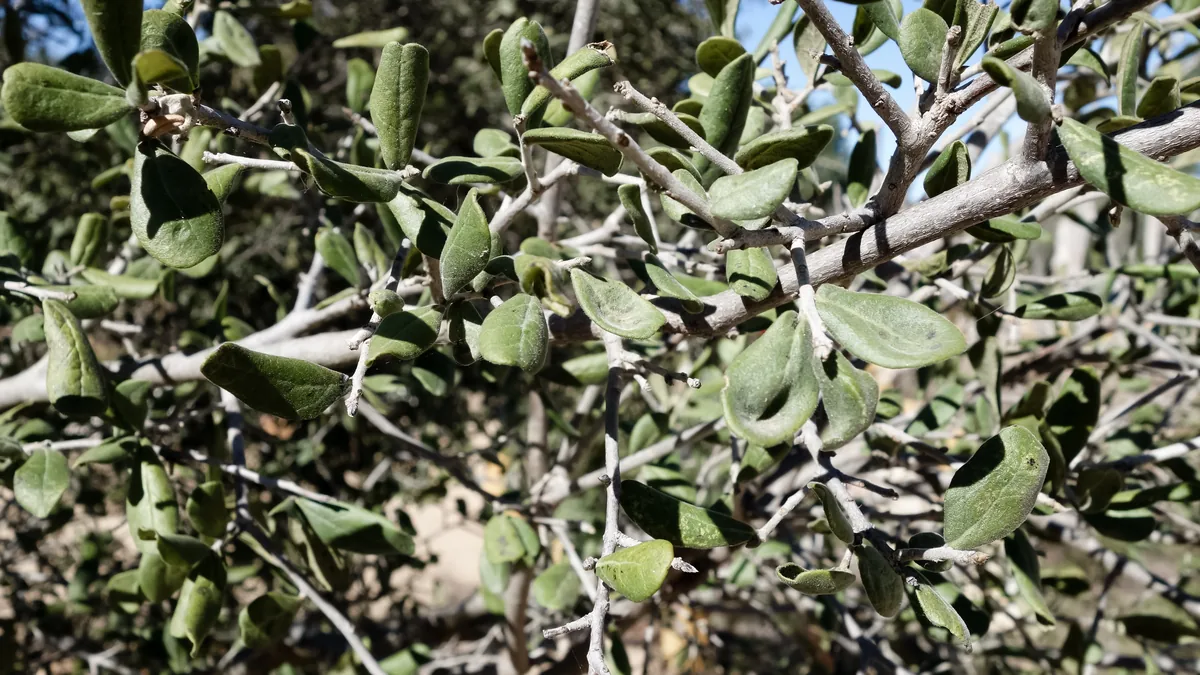
Texas persimmon (Diospyros texana) is a drought-hardy, often multi-trunked small tree or large shrub with smooth gray bark, small leaves, and black juicy fruit when female plants find a pollinator partner. Heights commonly range 10–25 feet in the wild, tighter in harsh sites—roots laugh at limestone where other fruit trees send resignation letters. subtropical and tropical Americas: Best matches are dry, well-drained Florida sites with lean soil and sun—think scrub-adjacent yards, not swamp lots. Puerto Rico’s drier south coast microclimates may trial it with drainage discipline; humid cloud-forest moods invite anthracnose side quests. Fruit is astringent until fully ripe; patience is a ingredient. Full sun for fruiting; partial sun tolerates but reduces crop swagger. Extremely drought-tolerant once established; deep occasional watering beats daily spritz culture on sand. Sow cleaned seed after pulp ferments off; germination can be slow—warm stratification experiments welcome. Softwood cuttings with bottom heat in warm months for clonal females if you already know the parent’s sex and fruit quality. Pick fruit fully soft and deep black for fresh eating; underripe fruit will pucker your soul. Prune for openness in humid areas to improve airflow and reduce leaf diseases.
Permaculture Functions
- Edible: Diospyros texana black cherry-sized fruit sweetens after black skin wrinkles -- stain hands like ink while making thick syrup for hill-country pancakes.
- Wildlife Attractor: Raccoons and coyotes spread seeds downhill -- while mockingbirds strip female trees unless you bag clusters early.
- Erosion Control: Taproots wedge into Edwards Plateau limestone so steep lots keep soil during flash floods -- that erase shallow-rooted lawn.
Companion Planting
Also mentioned as companions:
- Agarita
- Texas Mountain Laurel
- Blackbrush Acacia
Not yet profiled in PermiePortal
- Cattail — flags a hydrology mismatch; persimmon roots suffocate in soggy muck while cattail thrives.
- Japanese honeysuckle — twining stems girdle young trunks and shade out lower branches along fencerows.
Threats & Pressure