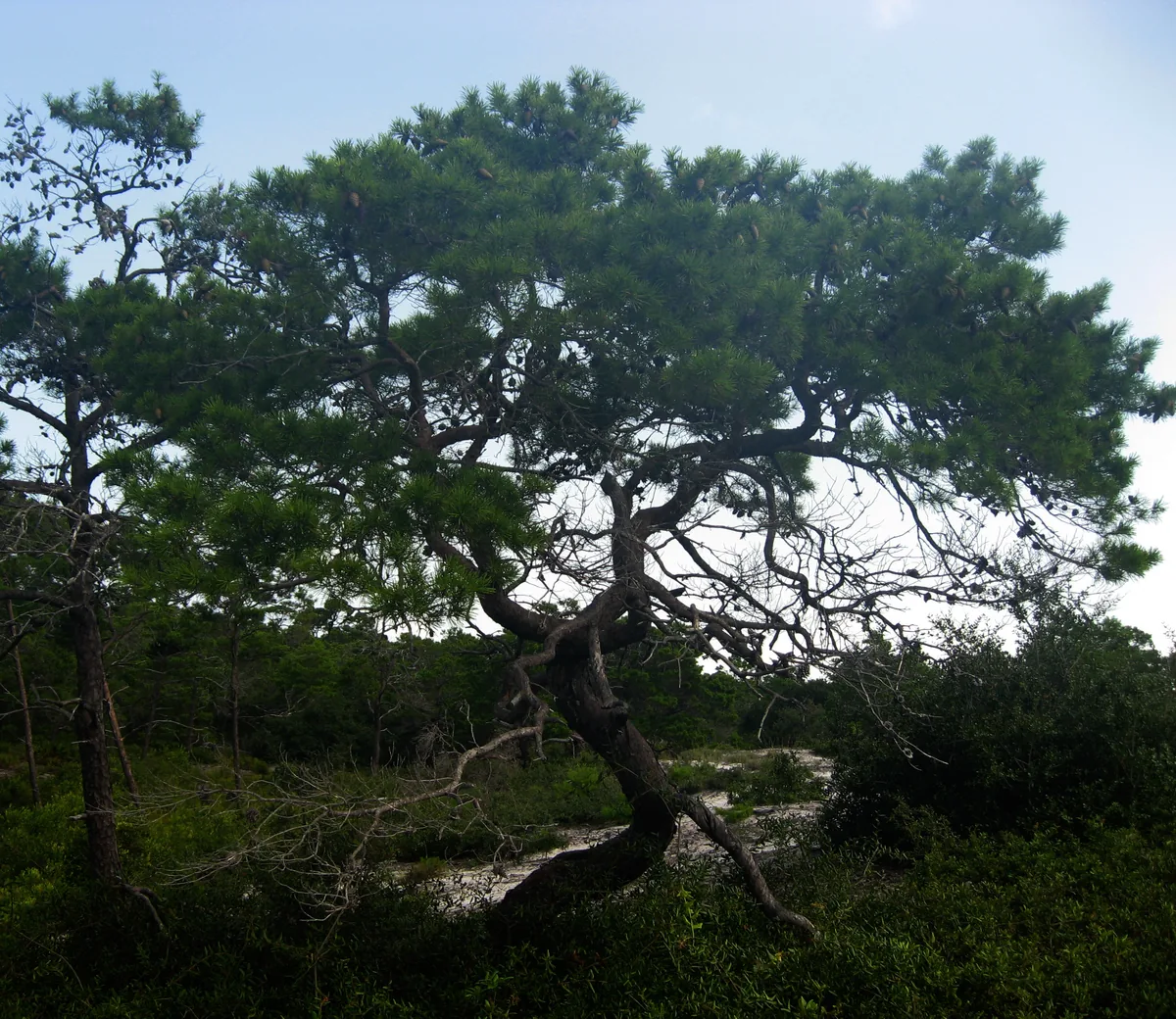
About
Sand pine (Pinus clausa) is a small to medium pine of deep sandy ridges and scrub in the southeastern United States, often multi-trunked with twisted form in harsh exposure and serotinous cones that open after fire in many populations. Heights of 20–40 feet (6–12 m) are typical, though stunted forms hug windswept dunes. It stabilizes sand, feeds squirrels with seeds, and teaches patience to anyone expecting timber-straight specimens. Full sun for dense needles and reliable cone production. Deep, acidic, excessively drained sands are home; tolerates drought once established. Avoid alkaline or compacted clay unless you enjoy pine funerals. Sow seed; heat may be needed to open serotinous cones—follow restoration nursery protocols. Transplant small seedlings with root balls intact. Prune only for clearance; do not top pines. Pine straw mulch can be raked sustainably from needle drop—avoid stripping living crowns. Timber use is modest; ecological value often exceeds board feet. Growth flushes follow warm wet periods.
Permaculture Functions
- Erosion Control: Pinus clausa taproots wedge into deep acidic sand -- where most broadleaf canopy trees stall without pumped water.
- Wildlife Attractor: Serotinous cones feed caching rodents after fire cues -- twisted crowns hold bark forage for brown-headed nuthatches and other scrub specialists.
- Windbreaker: Multi-stemmed clumps planted in staggered rows slow steady Gulf and Atlantic plain winds -- across field edges and citrus blocks.
- Biomass: Long acidic needle drop feeds mycorrhizal mats -- benefits oaks and palmettos planted in the same scrub story over time.
Companion Planting
- Fire ecology — many populations need periodic fire for recruitment; follow regulations
- Alkaline soil — chlorosis and chronic sulking
Threats & Pressure