About
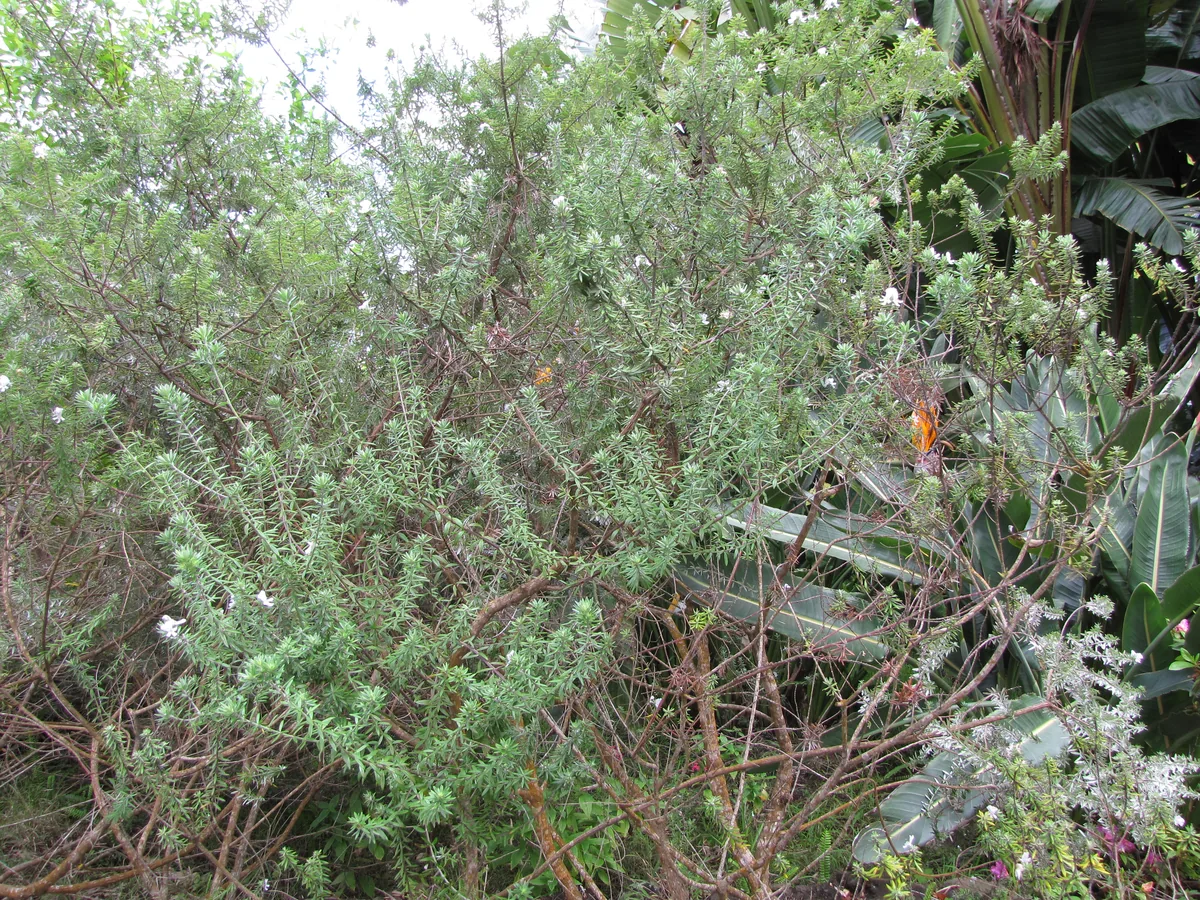
Coastal rosemary (*Westringia fruticosa*) is not a true rosemary, but a fine-leaved Australian shrub that plays the same visual role—gray-green linear leaves and a dense, rounded habit to about 1–2 m tall and wide. Small white to pale lilac flowers with speckled throats appear in waves through the warm months. It tolerates salt breeze, making it useful near Florida and Puerto Rico shorelines, yet still needs drainage during tropical downpours. Full sun for tightest habit; tolerates light shade with a looser form. Well-drained sandy or rocky soil; water to establish, then moderate drought tolerance. Avoid chronic wet feet. Cuttings: Semi-hardwood cuttings root easily under humidity in warm weather. Layering: Low branches touching soil can be pegged and severed once rooted for hedge expansion. Shear lightly after major bloom flushes to keep formal hedges; in informal food forests, prune for clearance around trunks of taller trees. Best planting is at the start of the rainy season for root establishment without daily hand watering.
Permaculture Functions
- Ornamental: Fine gray-green Westringia foliage and white to lilac-throated flowers mimic rosemary form -- without true Rosmarinus oils or flavor.
- Wildlife Attractor: Small speckled flowers offer pollen and nectar to native bees -- along hot, salty driveway strips.
- Border Plant: Dense rounded shrubs edge paths, dog runs, and citrus understories -- without thorns tearing harvest clothes.
- Windbreaker: Multiple staggered rows blunt onshore gales and salt spray -- before wind hits patio glass or tender understory perennials.
Companion Planting
Threats & Pressure