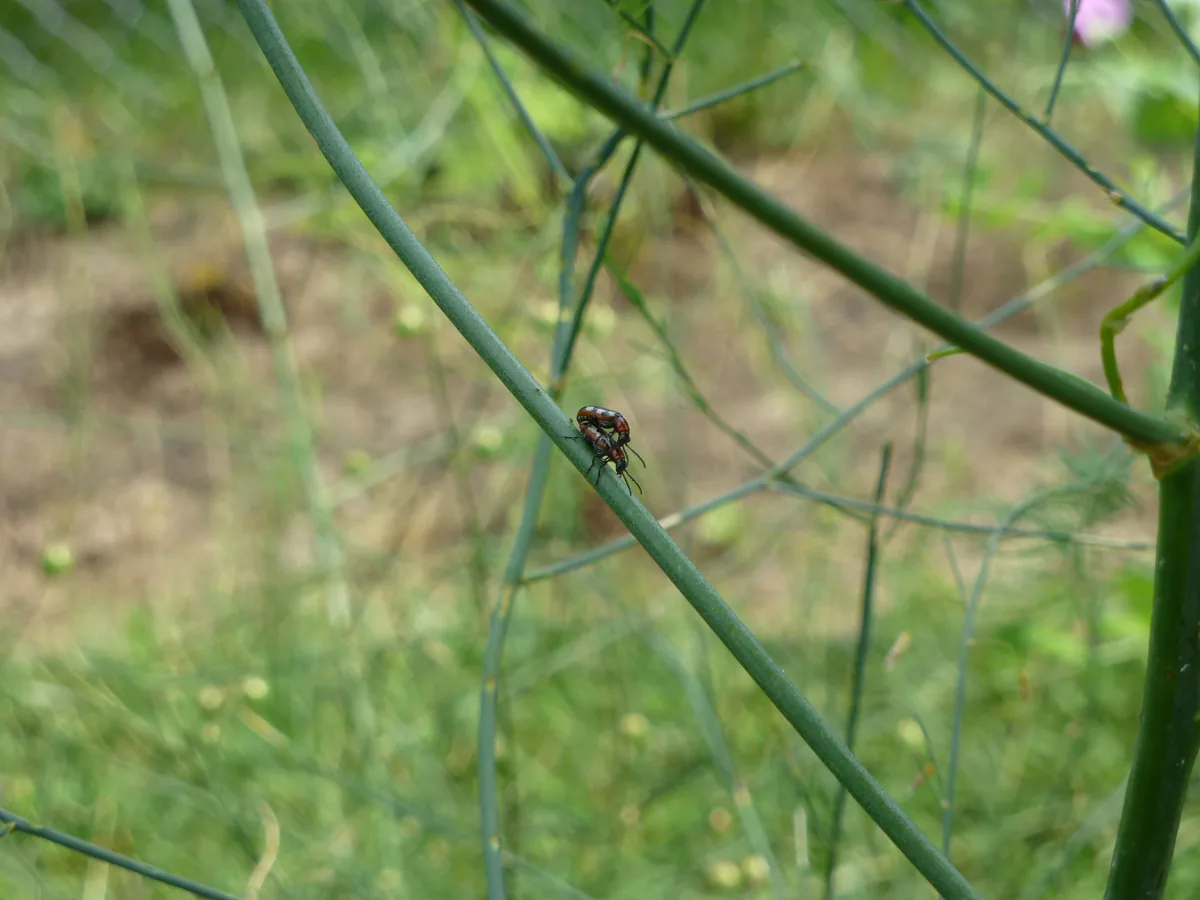
Field Identification
If new growth is curling, yellowing, sticky, or chewed, asparagus beetle may already be on the plant. This pest often builds quietly, then damage appears all at once. Feeding stress weakens growth, reduces yield, and opens the door to secondary disease. Early cleanup is much easier than fighting a full population surge later.
Inspect the newest growth first: leaf undersides, flower buds, stem joints, and tender tips where pests gather. Look for body shape, color, eggs, cast skins, honeydew, webbing, or fresh puncture marks. A hand lens and a white paper tap test help reveal small life stages. Matching visible pests with fresh plant damage confirms active infestation.
Not sure what you have? Use the symptom diagnosis tool →
How to Deal With It
Organic Control Methods
Lady beetles, lacewing larvae, minute pirate bugs, and ground beetles eat asparagus beetle eggs and larvae on ferns and spears. Tiny parasitic wasps attack eggs where diverse habitat exists. Flowering insectaries beside the bed feed adult predators through the fern season. Skip pyrethrin on a calendar if mummies or lacewing eggs are visible -- you farm beetles alone afterward.
Scout weekly from first spear through full fern, focusing outer rows and windward edges. Remove wild asparagus nearby that launches early flights into your bed. Track counts year to year; populations explode when fern residue stays overwinter and the same crowns get pushed for maximum spear count without recovery time. Flag fields that ran hot last season for earlier walks next spring.
Snap spears at soil line during harvest to strip eggs before hatch. Mow or destroy old ferns after frost where rules allow so adults have fewer overwintering sites. Avoid excess nitrogen that pushes lush fern flushes; beetles skeletonize soft tissue fast. Irrigate evenly so crowns stay productive without succulent waves. Replant new beds upslope from old, infested blocks when possible.
Hand-pick adults and larvae into soapy water on cool mornings -- beetles drop when startled. Flick clustered adults into a wide-mouth jar. Light row covers over young crowns exclude adults during flight if you open edges daily for harvest and reseal -- tedious but precise on small plots.
Neem azadirachtin and spinosad suppress larvae on ferns and spears when coverage is thorough -- add spreader on waxy fern needles. Insecticidal soap kills young larvae on contact; repeat after rain. Pyrethrin knocks adults down briefly; spray at dusk when bees are not on open flowers. Rotate materials so you do not flatten beneficials every week.
Let Nature Handle It
Natural Enemies
- Lady Beetles (Coccinellidae)
- Lacewing larvae (Chrysopidae)
- Parasitic Wasps (Hymenoptera)
- Ground Beetles (Carabidae)
Threat Map