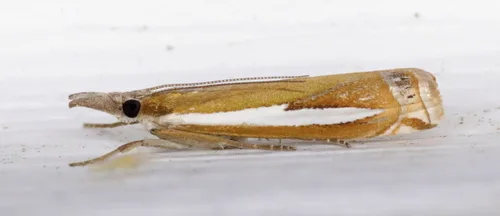
Field Identification
Sod webworms are grass-feeding caterpillars that live in silk-lined tunnels at the soil surface and clip blades at night. Irregular brown patches expand in warm weather and can merge across lawns and roughs. Adult moths flutter low at dusk dropping eggs on turf. They occur wherever cool- and warm-season grasses are maintained from temperate suburbs to subtropical golf edges.
Part grass near thatch and look for greenish caterpillars with dark heads and sparse hairs, up to roughly an inch long when mature. Frass pellets and silk tubes at the base confirm sod webworm versus chinch bug or billbug injury. Soap flush brings larvae up for counting. Compare with armyworm which lacks the dense silk tunnel habit.
Not sure what you have? Use the symptom diagnosis tool →
How to Deal With It
Organic Control Methods
Bacillus thuringiensis kurstaki works on small caterpillars when they ingest treated leaf tissue -- apply in evening and irrigate lightly if label allows. Beneficial nematodes infect caterpillars in moist thatch when species match label lists. Birds, ground beetles, and spiders reduce populations. Avoid prophylactic pyrethroid lawns that remove allies.
Endophytic turf grasses reduce damage on supporting cultivars -- buy certified seed. Avoid excessive thatch with proper mowing and occasional dethatching. Reduce night lighting near turf during moth flight if practical. Overseed thin areas so larvae have fewer easy crowns to reach.
Raise mowing height during outbreaks to maintain photosynthetic area. Core aerate compacted soils. Spot-check south slopes and along pavement where heat stacks stress on top of feeding.
For tiny lawns, soapy water flushes plus hand removal lowers numbers enough to skip sprays. Solarize renovation patches before reseeding when history is severe.
Bt is the first-line organic material for small larvae. Spinosad is labeled for many turf caterpillars where organic certification allows -- follow bee cautions if clover is flowering. Neem has supplemental suppression on some caterpillars. Repeat applications because thatch shields larvae from single passes.
Let Nature Handle It
Natural Enemies
- Parasitic Wasps
- Ground Beetles
- Birds
Threat Map