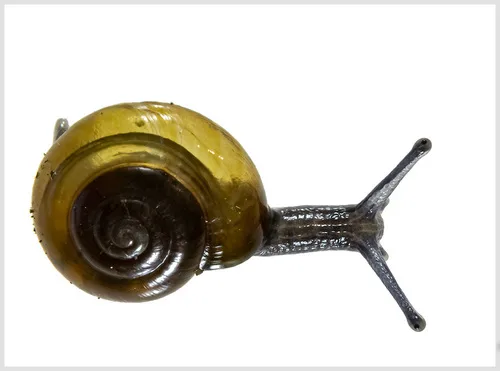
Field Identification
Glass snails are small glassy-shelled land snails that feed at night on seedlings, mushrooms, and decaying matter, sometimes rasping holes in tender leaves and fruit touching the ground. They favor cool humid microclimates under mulch, pots, and boards. In greenhouses and moist subtropical to temperate gardens they climb stems after rain and leave slime trails that confuse diagnosis with slugs.
Look for a thin translucent shell coiled flatly compared with many slugs which lack an external shell. Shine a light after dusk along bed edges to see movement. Slime trails are narrower than large banana slugs. Check under flats, stones, and irrigation emitters where humidity stays high all day.
Not sure what you have? Use the symptom diagnosis tool →
How to Deal With It
Organic Control Methods
Ground beetles, rove beetles, and centipedes eat small snails and eggs in soil litter. Nematodes labeled for mollusks are used professionally in some countries -- availability varies. Encourage songbirds near food production only when food safety rules allow natural foraging. Reduce ant tending of honeydew-producing insects indirectly helps because ant wars can disturb snail predators less than you might think, but clean canopies still matter.
Water in the morning so beds surface-dry before night feeding. Remove boards, debris, and unused pots that create all-day refugia. Copper tape barriers on bench legs and raised beds deliver a mild repellent film when kept shiny. Quarantine new plants from wet nurseries with visible snails.
Hand collect during evening walks two nights in a row after rain -- population drops noticeably on small sites. Diatomaceous earth bands around seedlings abrade soft bodies when dry -- reapply after irrigation. Beer traps catch some individuals but also attract from neighbors' yards, so place sparingly at problem corners only.
Hunt under mulch with a trowel after overhead watering forces movement. For seed flats, elevate on mesh benches with legs in moats of soapy water where design allows. Crushed eggshells help marginally -- do not rely on them alone on high-value starts.
Iron phosphate bait labeled for organic use kills snails that consume pellets -- apply sparingly away from waterways and non-target feeding animals. Coffee grounds and salt damage soil and are poor substitutes. Never use salt near plants. Neem on foliage targets chewing insects more than snails; focus bait and moisture management for glass snails.
Let Nature Handle It
Natural Enemies
- Ground Beetles
- Nematodes
- Birds