Field Identification
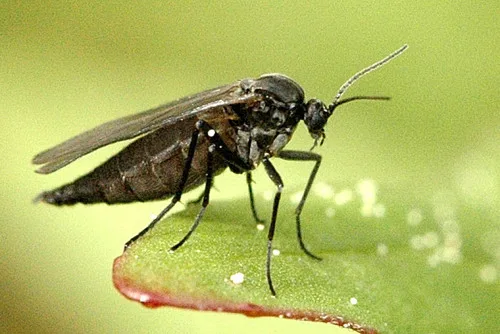
Fungus gnat larvae are translucent legless maggots with black heads that live in the top layer of moist potting mix and feed on fine roots and organic matter. Seedlings yellow, stall, or damp off when feeding and associated root rots stack stress. Adults are tiny dark flies that zigzag near moist media and lights. They explode in propagation houses, houseplant collections, and overwatered containers everywhere plants are grown indoors or under shade.
Slice the top half inch of media and look for threadlike larvae -- compare with shore fly larvae which are more opaque and legless maggots with no distinct head capsule in some taxa. Yellow sticky cards catch adults and show population trends. Potato disks pressed into media lure larvae for monitoring counts after a day or two.
Not sure what you have? Use the symptom diagnosis tool →
How to Deal With It
Organic Control Methods
Hypoaspis miles (Stratiolaelaps scimitus) predatory mites hunt larvae in moist media when introduced at label rates. Steinernema feltiae nematodes infect sciarid larvae when media is warm and stays moist for days after application. Bacillus thuringiensis israelensis (Bti) soil formulations help in some label-approved settings for fly larvae in containers. Avoid broad drenches that sterilize media unless you replan biocontrol reintroduction.
Let the surface of containers dry slightly between irrigations so algae and algae-feeding larvae are less favored. Screen greenhouse vents with fine mesh to exclude adults. Use pasteurized or reputable bagged mixes for seed flats. Remove fallen leaves on bench tops that keep humidity high around pots.
Bottom water seed flats to keep the surface drier while roots still access moisture. Increase air movement with fans in propagation zones. Topdress with a thin sand or grit layer on houseplants to reduce egg laying -- repot if algae crusts form. Cull severely stunted trays early so larvae do not spread bench to bench.
Vacuum adult clouds at dusk near doors with a shop vac as a stopgap during outbreaks. Replace the top inch of infested potting mix on cherished houseplants and dispose off-site. Solarize small batches of questionable compost before mixing flats if you have sunny space and time.
Neem drenches suppress larvae when applied on schedule and allowed to move through the root zone. Insecticidal soap drenches can work on light infestations but may harm tender roots if repeated excessively. Hydrogen peroxide dilutions circulate online -- they are inconsistent and can damage biology; prefer nematodes or predators with clearer evidence. Always test a few pots before treating an entire greenhouse run.
Let Nature Handle It
Natural Enemies
- Predatory Mites
- Nematodes
- Predatory Beetles