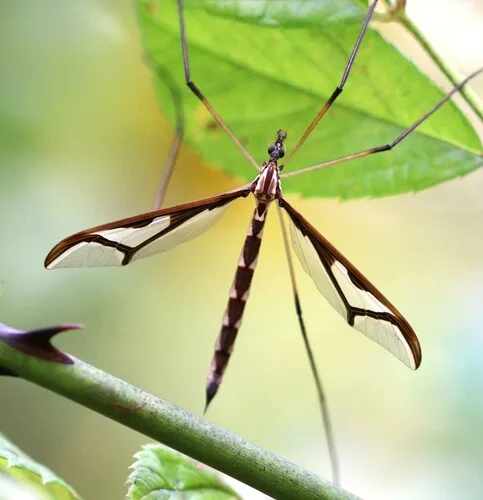
Field Identification
Crane fly larvae, often called leatherjackets in turf literature, are gray-brown legless maggots in soil that chew grass crowns and roots. Damage resembles drought or cutworm injury but patches feel spongy underfoot and pull up easily. Adults are long-legged flies that emerge in swarms during cool wet periods and do not feed as adults. They are common in temperate lawns, pastures, and wet meadows across the Americas.
Peel back sod at the interface of green and dead turf to find larvae without obvious legs, tapered at both ends. Compare with white grubs which have brown heads and C-shaped bodies with thoracic legs. Birds tearing turf is a clue. Night lighting of adults near wetlands helps confirm species presence even when larvae are deep.
Not sure what you have? Use the symptom diagnosis tool →
How to Deal With It
Organic Control Methods
Starling flocks and other insectivorous birds reduce leatherjacket numbers where allowed to forage. Ground beetles and rove beetles eat eggs and small larvae at the soil surface. Entomopathogenic nematodes (Steinernema spp.) applied when soil is moist and warm can infect tipulid larvae -- follow label species notes because efficacy varies. Avoid broad-spectrum lawn sprays that remove these allies.
Improve surface drainage so soils are not waterlogged for weeks, which favors egg survival in some species. Avoid over-irrigating cool-season lawns in spring when adults are laying. Reduce outdoor lighting pointed at turf during peak flight if local guidance links light to egg deposition on your species. Overseed thin areas in fall to replace damaged crowns before winter.
Raise mowing height slightly to increase photosynthetic area while roots recover from feeding scars. Core aerate compacted soils to help roots outgrow localized injury. Rotate vegetable beds away from chronically soggy corners where leatherjackets concentrate. Topdress thin lawns with thin compost after aeration to speed recovery.
Solarizing a small patch before reseeding kills larvae but also turf -- use during renovation. Hand sorting garden soil for a new bed removes many larvae at planting time. For high-value sod, roll back strips and pick larvae when infestations are localized.
Nematode applications are the main organic tool with replicated turf trials behind them. Neem soil drenches show mixed results and can affect non-target soil fauna if overused. Soap drenches flush larvae to the surface for identification more than for reliable kill. Always irrigate after nematode application so carriers reach the root zone.
Let Nature Handle It
Natural Enemies
- Ground Beetles
- Nematodes
- Birds