About
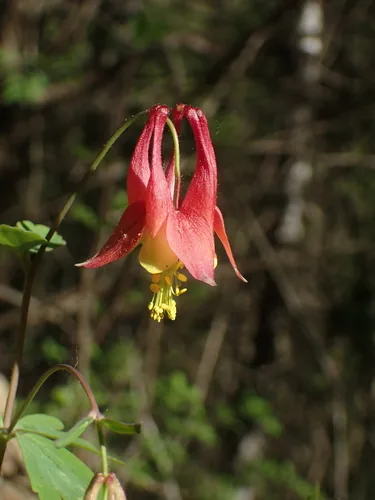
Wild columbine (Aquilegia canadensis) is a short-lived perennial of eastern North American wood margins and cliffs, with red and yellow nodding flowers adapted to hummingbirds and long-tongued bees. Plants reach 1–2 feet (30–60 cm), self-sowing into rocky, well-drained pockets. It thrives in dappled shade and lean soils where irrigation is modest. Partial shade to light sun; afternoon shade reduces scorch in hot climates. Well-drained, humus-rich soils suit it; tolerates rocky slopes. Avoid wet clay; mulch lightly. Sow seed outdoors in fall; allow self-sowing where volunteers are welcome. Divide carefully—taproot resents shovel violence. Leave flowers for pollinators; collect seed when capsules split if expanding patches ethically. Peak bloom tracks local spring warmth.
Permaculture Functions
- Pollinator: Aquilegia canadensis red-yellow nodding spurs fit hummingbird bills and long-tongued bees -- spring ephemerals sync bloom before canopy closes.
- Ornamental: Capitate flowers hang like lanterns on wiry stems -- limestone outcrop plantings look intentional without mulch volcanoes.
- Wildlife Attractor: Finches shake seed from erect capsules; columbine duskywing caterpillars chew foliage -- holes mean success, not failure.
- Ground Cover: Basal rosettes occupy rock crevices -- self-sows into gravel where irrigation is honest.
Companion Planting
- Leaf miners cosmetic damage—tolerate or remove leaves; avoid panic sprays on pollinator plants
- Short-lived individuals—plan self-sowing or succession
Threats & Pressure