About
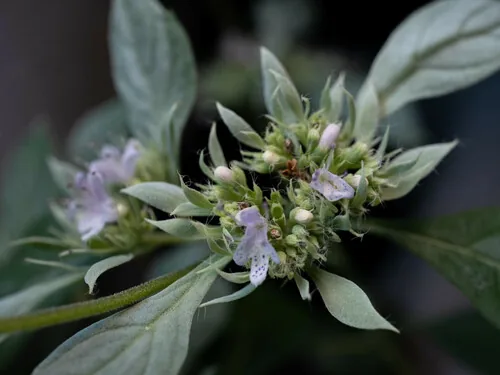
Wild basil (Clinopodium vulgare) is a rhizomatous perennial mint relative native to Europe and temperate Asia, naturalized in parts of North America in meadows, woodland edges, and roadsides. Aromatic foliage and whorls of small pink-purple tubular flowers draw pollinators in summer. It behaves more politely than spearmint in many gardens, forming expanding patches rather than launching subterranean coups. Full sun to light shade; leaner soils and sun intensify aroma. Average moisture suits it; drought-tolerant once established compared with culinary basil. Avoid waterlogged winter clay without slope or amendment. Sow seed in spring after last frost; germination moderate. Divide rhizomatous patches in spring or fall. Softwood cuttings root under humidity in late spring. Snip leafy stems before heavy bloom for strongest kitchen flavor; use like mild oregano or savory. Dry bundles in shade with airflow; strip leaves once crisp.
Permaculture Functions
- Edible: Clinopodium vulgare leaves carry oregano-savory resin -- use in bean pots and herb salts; not a Genovese basil substitute.
- Pollinator: Pink-purple labiate tubes open in whorls through July -- long-tongued bees work them when thyme fields look tired.
- Pest Management: Carvacrol-rich foliage can mask crop odors when dotted through brassica rows -- insects still arrive; scouting stays mandatory.
- Ornamental: Rhizomatous drifts read cottage-meadow soft -- spreads politely compared with Mentha spicata underground riots.
Companion Planting
Also mentioned as companions:
- Coneflower
Not yet profiled in PermiePortal
- Naturalized status — confirm local ecologist guidance before planting near sensitive natural areas
- Mint-family allergies — aromatic concentration can irritate sensitive skin in hot sun
Threats & Pressure