About
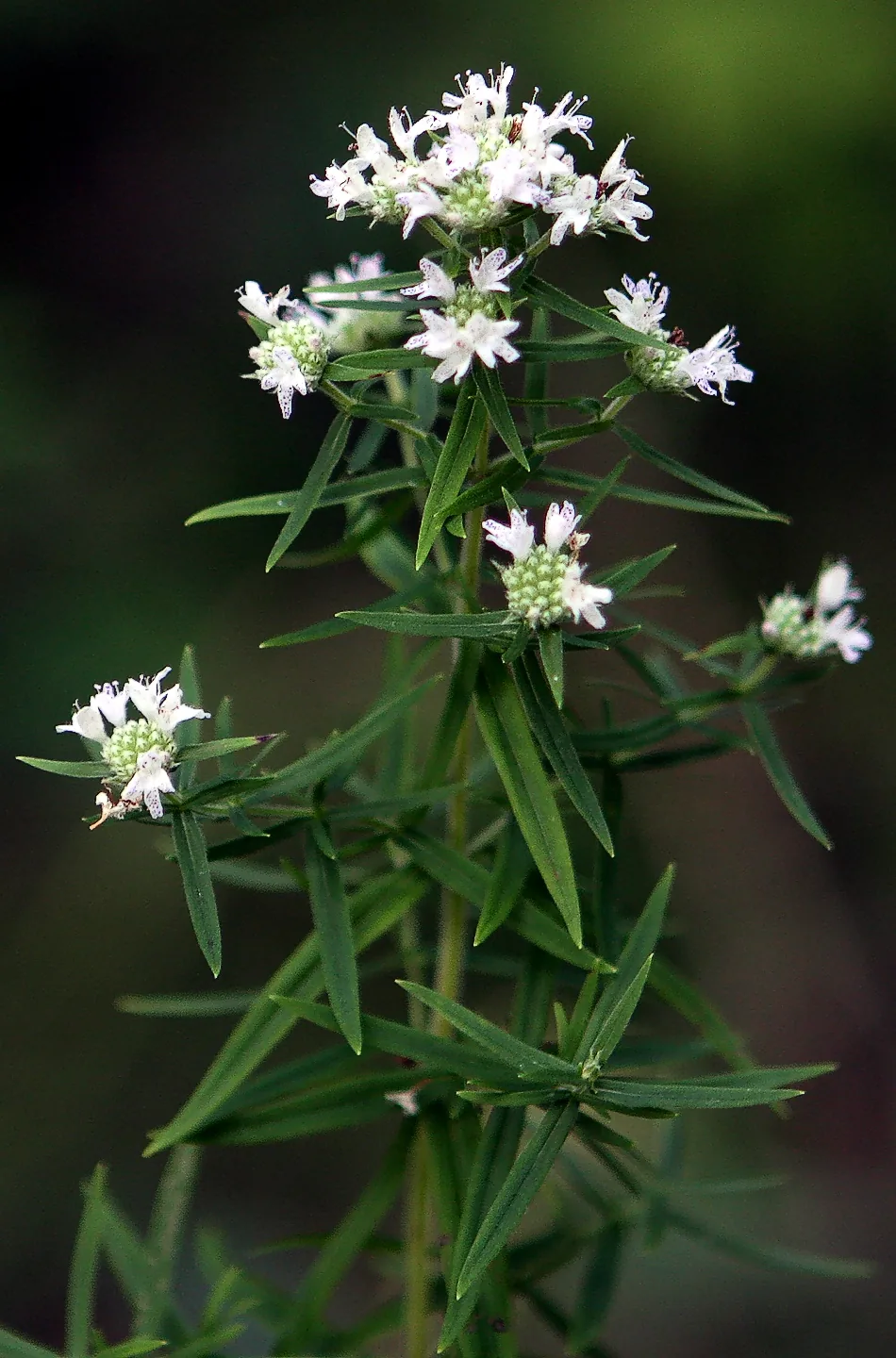
Virginia mountain mint (Pycnanthemum virginianum) is a clump-forming perennial mint relative of moist meadows, roadsides, and open woods across eastern North America. Aromatic leaves and flat terminal heads of tiny white spotted flowers draw insect clouds in mid to late summer. Unlike aggressive true mints, it spreads modestly and behaves in pollinator strips, rain-garden shoulders, and herb spirals. Full sun for tightest growth and heaviest bloom; tolerates light shade with looser habit. Prefers moist, average to rich soils; handles short drought once established but looks best with even moisture. Airflow helps foliage stay clean in humid summers. Sow seed in fall outdoors or cold-stratify for spring. Divide clumps in early spring or fall; pieces with roots establish quickly. Soft tip cuttings root under humidity in late spring. Snip flowering tops at peak bloom for teas or drying; flavor is strong—start with small amounts. Leave late stems for beneficial insect nesting habitat if you are not collecting seed.
Permaculture Functions
- Pollinator: Pycnanthemum virginianum flat corymbs of spotted white florets host small bees, wasps, and halictids during midsummer dearth -- air movement keeps mildew off in humid eastern summers.
- Edible: Leaves and flowering tops steep to a bold mint-oregano tea -- not supermarket Mentha; start with short steeps to respect potency.
- Pest Management: High monoterpene foliage can mask host cues for some chewing insects -- weave into mixed insectary bands, not monoculture blocks.
- Ornamental: Clumping habit stays civilized compared with true mints -- white disks read like buttons in both rain gardens and formal borders.
Companion Planting
Also mentioned as companions:
- New England Aster
- Goldenrod
Not yet profiled in PermiePortal
- True mint confusion — verify square stems and floral structure; do not swap care with Mentha species blindly
- Skin sensitivity — aromatic oils plus sun can irritate some handlers; wash hands before UV tanning experiments
Threats & Pressure