About
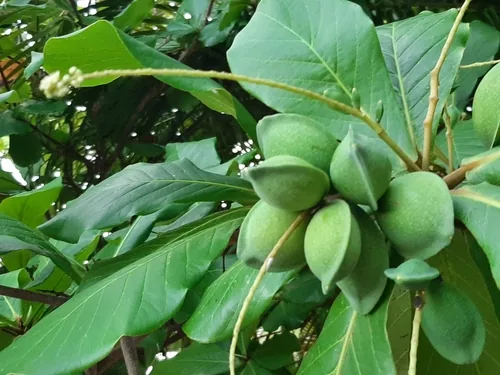
Tropical almond (Terminalia catappa) is the same species many coastal plantings call sea almond or Indian almond—a large tree with tiered branches, glossy leaves that color before abscission, and fibrous drupes containing edible kernels when roasted properly. Heights of 40–60 feet (12–18 m) are common along tropical shores. This duplicate listing exists for searchers using “tropical almond” language; see Sea Almond entry for parallel copy. Full sun for dense crown and reliable fruiting near coasts. Sandy, well-drained soils with seasonal moisture suit it; tolerates salt spray better than many broadleaf trees. Irrigation speeds establishment inland. Sow fresh seed; transplant young trees with root integrity. Prune for clearance under wide limbs. Collect fallen fruit when husks dry; process kernels with care—fibers are not dental floss. Leaf drop seasons can be messy—plan paths accordingly.
Permaculture Functions
- Edible: Terminalia catappa kernels inside fibrous drupes turn nutty after roasting -- husks are stringy hazards, so process on tarps, not over white upholstery.
- Shade Provider: Tiered, pagoda-shaped crowns cast deep shade over tropical yards and livestock pens -- seasonal leaf drop is heavy; plan gutters and understory for sudden sunflecks.
- Windbreaker: Coastal plantings knit into salt-tolerant windwalls -- salt spray bronzes young foliage but mature trees hold beaches and roadsides where less tolerant broadleaves fail.
- Ornamental: Broad glossy leaves color sunset-red before abscission -- the show reads tropical even where the tree is functioning as a municipal street tree.
Companion Planting
- Falling fruit and leaves—site away from skylights and parked cars
- Duplicate taxonomy with Sea Almond entry—Terminalia catappa is the scientific anchor
Threats & Pressure