About
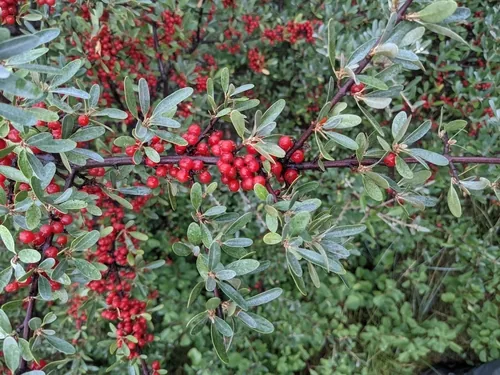
Thorny buffaloberry (Shepherdia argentea) is a cold-hardy actinorhizal shrub of North American prairies and river terraces, with silvery leaves, thorny stems on many plants, and red or yellow tart berries that feed birds and traditional kitchens where processing is understood. Plants reach 6–12 feet (1.8–3.5 m), often forming thickets. Thorns vary by individual—assume gloves until proven otherwise. Full sun for densest silver foliage and heaviest fruiting. Tolerates poor, alkaline, sandy soils; prefers consistent moisture but withstands cold dry winters. Avoid waterlogged clay without percolation. Sow stratified seed; hardwood cuttings with hormone. Prune to manage thicket density along paths. Pick berries when fully colored—process into sauces or jellies per traditional methods. Leave some fruit for wildlife. Peak ripening tracks mid-to-late summer warmth.
Permaculture Functions
- Nitrogen Fixer: Shepherdia argentea Frankia roots fix nitrogen on alkaline Great Plains terraces -- green mulch returned after pruning feeds elderberries without urea subsidy.
- Wildlife Attractor: Scarlet drupes hang into winter for cedar waxwings -- while thicket architecture hides sharp-tailed grouse from avian predators.
- Border Plant: Wolf-height hedges clothed in silver needles stop drifting snow faster than woven wire -- along northern lanes.
- Erosion Control: Suckering roots weld Missouri River cobble bars -- where cottonwood seedlings still lack footing.
Companion Planting
- Thorns — plan paths, ladders, and vet visits accordingly
- Dioecious fruiting—plant male and female individuals if fruit is the goal
Threats & Pressure