About
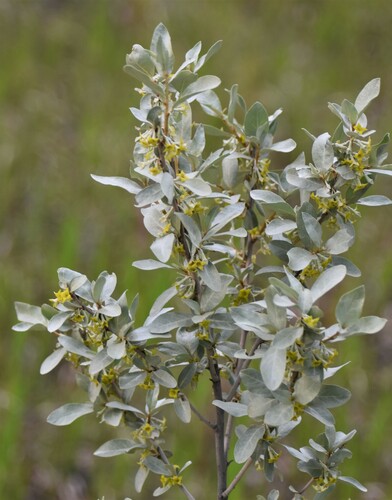
Silverberry (Elaeagnus commutata) is a cold-hardy actinorhizal shrub of northern North American prairies and riverbanks, bearing silvery-scaly leaves, fragrant pale flowers, and red speckled berries that feed birds. Plants reach 6–12 feet (1.8–3.5 m), often thicket-forming on lean soils where other shrubs sulk. It improves fertility on tough sites while demanding respect for suckering ambition. ☀️💧 Sun and Water Requirements: Full sun for densest silver foliage and heaviest fruiting. Tolerates poor, sandy, and alkaline soils; prefers consistent moisture but withstands cold dry winters. Avoid waterlogged clay without percolation. ✂️ Propagation: Sow stratified seed; hardwood cuttings with hormone. Remove excess suckers if maintaining a single-clump aesthetic. 🌾 Harvest / Best Use Timing: Berries are primarily wildlife food—human use is limited and culturally specific. Leave fruit for birds through late summer and fall. Growth peaks during warm months with long days.
Permaculture Functions
- Nitrogen Fixer: Actinorhizal roots enrich lean soils for neighbors when prunings return as mulch.
- Wildlife Attractor: Flowers feed pollinators; fruit feeds birds in northern hedgerows.
- Border Plant: Thickets define windbreaks and livestock lanes in cold climates.
- Erosion Control: Roots stabilize riverbanks and disturbed cuts.
Practitioner Notes
- Silver scales reduce transpiration—drought posture is chemistry, not attitude.
- Wolf willow name confuses willow seekers—Elaeagnus commutata is the scientific receipt.
- Birds spread seed—plant away from fragile native remnants if hybridization or invasion is a local concern.
- Fixation works best in lean soil—bagged nitrogen is insulting to actinorhizae.
Companion Planting
- Wild Plum — thicket neighbor extending fruit succession for wildlife
- Raspberry — bramble layer at sunnier thicket edges
- Serviceberry — earlier soft fruit at slightly less extreme sites along the margin
- Suckering — expands without invitations unless edged or mowed
- Allelopathy near delicate herbs—give space or accept casualties
Pest Pressure