About
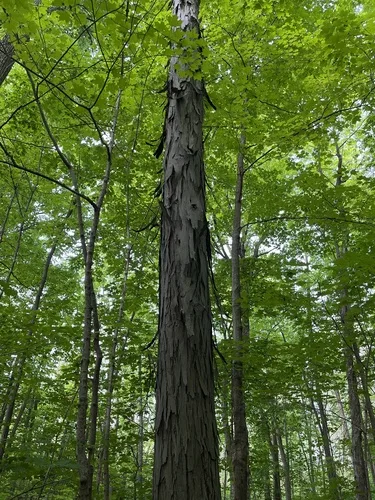
Shagbark Hickory (Carya ovata) is a useful perennial species in the Juglandaceae family, native or long-naturalized across parts of the Americas and Eurasia depending on lineage. Mature growth is typically a tree form suited to layered guilds, with reliable productivity when site conditions match its ecology. In a permaculture system it contributes food, habitat, and system resilience rather than single-crop output. Best performance comes with full sun to light partial shade, depending on heat intensity. Keep soil moisture steady during establishment, then water by seasonal demand. Well-drained fertile soil works for most upland entries, while wetland species require saturated margins. Most growth accelerates between 58°F (14°C) and 85°F (29°C), with stress rising near 102°F (39°C). Direct seeding is the simplest method where climate allows; sow at the start of the local favorable season and keep the seed zone evenly moist through germination. A second pathway is transplanting nursery starts or divisions once roots are active and temperatures are stable. Woody entries can also be established from dormant bare-root stock or grafted material for cultivar reliability. Harvest edible portions at peak maturity for intended use: leafy crops before heat stress, fruiting types at full color, root crops after starch set, and nuts or grains once fully mature and dry. For ecological functions, the strongest value appears after canopy closure, flowering, and annual residue cycling, when soil cover and habitat effects become consistent.
Permaculture Functions
- Edible: Carya ovata sweet kernels hide inside shells tough as tools -- pound after autumn drop for baking and porridge once you sort floaters from sinkers.
- Wildlife Attractor: Paper-shelled nuts fuel squirrels -- while shag peeling bark flakes host overwintering insects woodpeckers shred for larvae.
- Shade Provider: Late-leaf canopy opens turf for spring ephemerals yet spreads wide summer shade -- over pawpaws, elderberries, and livestock loafing pens by midseason.
Companion Planting
No companion data yet.
- Blueberry - sensitive to juglone and often declines near mature hickories.
- Pawpaw - juvenile shade tolerance fits beneath maturing canopy.
- Hazelnut - lower canopy nut production extends guild output.
- Little Bluestem - drought-tolerant ground layer for soil protection.
Threats & Pressure