About
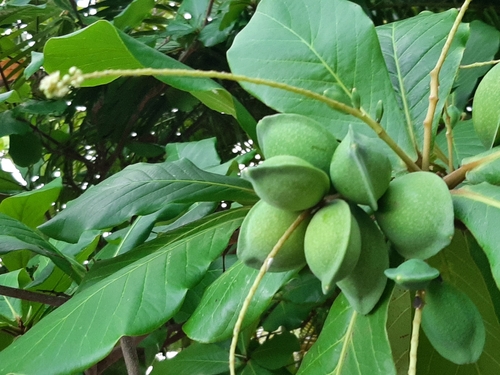
Sea almond (Terminalia catappa) is a large tropical tree widely planted along tropical coasts for horizontal branches, glossy leaves that color before abscission, and almond-flavored seeds inside fibrous drupes. Heights of 40–60 feet (12–18 m) are common, casting broad shade on beaches and village commons. Seeds are eaten roasted where traditions exist; the tree also stabilizes sandy shores and tolerates salt spray better than many broadleaf species. ☀️💧 Sun and Water Requirements: Full sun for dense crown and reliable fruiting on mature trees. Sandy, well-drained soils near coasts match native ecology; tolerates seasonal drought once established with deep roots. Irrigation during establishment speeds growth inland; avoid waterlogging. ✂️ Propagation: Sow fresh seed; germination is rapid in warm humid conditions. Transplant when young—large specimens resent root disturbance. Prune for clearance under wide limbs; avoid topping. 🌾 Harvest / Best Use Timing: Collect fallen fruits when husks dry; crack seeds for roasting per vetted methods. Leaf drop is seasonal in many climates—plan paths accordingly. Peak growth tracks year-round warmth in true tropics.
Permaculture Functions
- Edible: Kernel inside the seed coat provides roasted snack where processing removes fibrous husk safely.
- Shade Provider: Wide crown shelters beaches, markets, and understory nurseries.
- Windbreaker: Grouped trees blunt coastal winds and salt spray for interior plantings.
- Ornamental: Red fall-like leaf color before drop adds tropical drama without maple imports.
Practitioner Notes
- Terminalia catappa is the scientific receipt—common names travel faster than taxonomy at beach nurseries.
- Leaf drop seasons are messy—mulch paths or sweep like you mean it.
- Coastal salt spray bronzes young leaves—rinse occasionally if aesthetics matter more than ecology.
- Roasted kernel flavor rewards work—raw husk gnawing is for squirrels, not dentists.
Companion Planting
- Coconut Palm — complementary coastal canopy architecture with different leaf texture
- Lemongrass — perimeter herb along maintenance paths with volatile oils
- Papaya — fast fruiting neighbor using vertical space under open coastal canopies during establishment
- Falling fruits and large leaves—site away from glass skylights and parked cars
- Seed processing — sharp tools and patience required; fibers are not dental floss
Pest Pressure