About
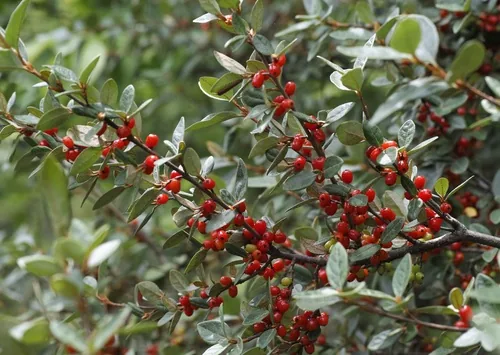
Russet buffaloberry (Shepherdia canadensis) is a cold-hardy nitrogen-fixing shrub of northern North American forests and river terraces, bearing silvery-scaly leaves, inconspicuous flowers, and tart orange-red berries high in saponins that foam when crushed. Plants reach 3–8 feet (0.9–2.4 m), often thicket-forming. Fruit supports Indigenous foodways where processing is understood; raw handfuls are astringent and soapy—respect the chemistry. Full sun to partial shade; best fruiting in bright sites. Tolerates poor, alkaline, and sandy soils thanks to actinorhizal roots; prefers consistent moisture in summer but handles cold dry winters. Avoid waterlogged clay without percolation. Sow stratified seed; semi-hardwood cuttings with bottom heat. Prune to renew fruiting wood and reduce thicket density along paths. Harvest berries when fully colored and slightly soft; whip, dry, or process per traditional recipes—do not treat like supermarket blueberries. Peak picking tracks mid-summer warmth in boreal and montane sites.
Permaculture Functions
- Nitrogen Fixer: Shepherdia canadensis roots nodulate with Frankia actinobacteria that pull atmospheric nitrogen into woody stems -- prune-and-drop cycles move that fertility to neighboring rows on alkaline sand without soluble nitrogen passes.
- Wildlife Attractor: Orange-red drupes pull waxwings, grouse, and bears across boreal thickets -- while silver foliage hides nesting songbirds at the shrub line.
- Edible: Ripe berries foam from saponins -- traditional processing is the honest route; raw handfuls stay astringent and soapy without the kitchen steps elders document.
- Border Plant: Thorny colonies mark cold hedgerows, pasture corners, and wildlife corridors -- where informal density beats mowed monoculture edging.
Companion Planting
- Saponin content—raw overeating is unwise; learn processing from vetted sources
- Name collision with true soapberries—Shepherdia canadensis is the scientific anchor here
Threats & Pressure