About
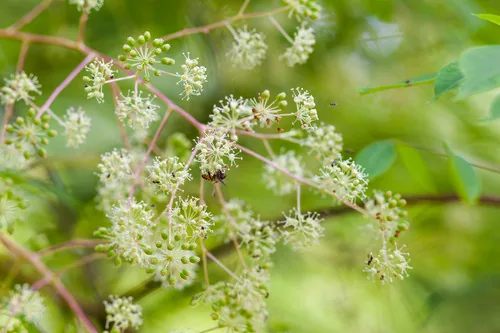
Prickly elder (Aralia spinosa), widely called devil’s walking stick, is a deciduous understory tree of eastern North America that erupts each spring with huge bipinnate leaves on spiny stems. Creamy panicles tower above foliage in summer, followed by dark berries on colorful pedicels. It is a statement plant for naturalistic edges where drama beats lawn minimalism. Part shade to sun; best stem color and bloom in bright edge light. Moderate moisture; tolerates seasonal dry once roots run but wilts in extreme drought without mulch. Rich, well-drained humus; tolerates clay if drainage is honest. Seeds: double dormancy common—sow fresh and wait, or stratify in stages. Root cuttings from thick roots in winter. Suckers can be dug with roots in spring. Berries are sparingly used in traditional foodways; modern foragers should verify preparation and tolerance. Cut spent inflorescences if self-sowing is unwanted in small lots. Wear leather when handling stems—spines are not decorative fiction.
Permaculture Functions
- Edible: Young Aralia spinosa leaf shoots blanch like vegetable umbrellas in Appalachian traditions while ripe berries need cooking and caution because raw aralins disagree with many stomachs -- never confuse with toxic look-alikes on sloppy forage days.
- Wildlife Attractor: Cream panicles feed diverse flies and bees; dark berry clusters feed robins and catbirds; huge leaves shelter sphinx caterpillars -- expect holes as a feature, not a failure, if swallowtails find your patch.
- Ornamental: Giant bipinnate leaves on spiny trunks read tropical in temperate woodland edges -- winter silhouette of bare spines doubles as deer deterrent sculpture along paths.
- Border Plant: Suckering clumps knit wet edge thickets where softer shrubs would fold under deer pressure -- give walking routes wide berth because stem armature is not cosmetic plastic.
Companion Planting
- Spiny stems and caustic sap can injure skin and eyes during rough handling
Threats & Pressure