About
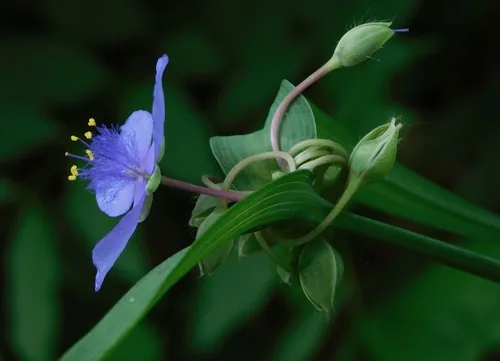
Ohio spiderwort (Tradescantia ohiensis) is a resilient prairie-edge perennial with arching grass-like leaves and three-petaled blue-violet flowers that open in morning cool and melt by afternoon heat—a honest schedule for busy pollinators. Plants form clumps 1–2 feet (30–60 cm) tall, spreading slowly into sunny openings. Young shoots and flowers are mild edibles where identification is certain, and the plant excels in meadow strips, rain-garden shoulders, and any border tired of thirsty annuals. Full sun to light shade; blooms heaviest with good light. Tolerates average to moist soils; occasional drought once established but looks fresher with steady moisture through warm periods. Avoid permanently soggy anaerobic muck; prefers well-drained loam with mulch. Divide clumps in early spring or after flowering; pieces reroot quickly in warm soil. Sow seed outdoors in fall for natural stratification or cold-stratify 4–6 weeks. Deadhead if self-sowing becomes chatty in formal beds. Gather tender young leaves and flowers in cool mornings for salads—verify ID and site cleanliness. For ornamental use, cut spent stems after the purple flush fades to tidy clumps. Peak bloom tracks lengthening warm days, not a single holiday.
Permaculture Functions
- Pollinator: Tradescantia ohiensis blooms open cool-blue for a few morning hours, offering pollen and nectar to small native bees before petals dissolve by noon heat -- beats double-flowered cultivars that forgot how to feed insects.
- Ground Cover: Slowly widening clumps fill sunny rain-garden shoulders and prairie reconstructions between taller grasses -- not a monoculture carpet, just rhythmic punctuation you can divide every few years.
- Edible: Young stem tips and flower petals taste mild when ID is certain and spray drift absent -- still verify hairs and bracts against other Tradescantia because look-alike errors belong in textbooks, not ER visits.
- Ornamental: Narrow arching leaves and three-petaled violet-blue flowers carry honest meadow aesthetic through warm months -- pair with little bluestem for texture contrast without color clash.
Companion Planting
- Wet clay stagnation — rot-prone crowns if water never moves
- Confusion with other Tradescantia species—verify hairs and bracts before eating
Threats & Pressure