About
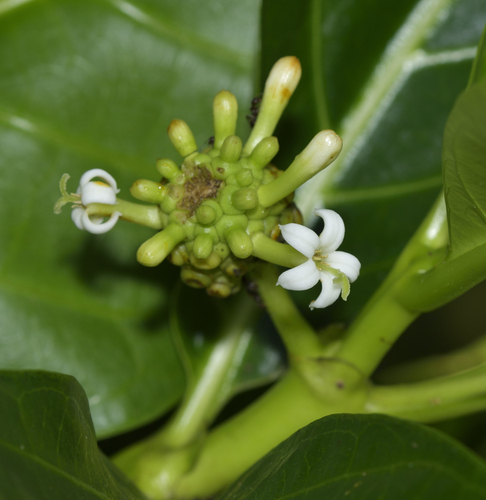
Morinda citrifolia is an evergreen shrub to small tree from Southeast Asia and the Pacific that naturalized across humid tropics, famous for knobby yellow-green “cheese fruit” and glossy opposite leaves. Plants range from about 10–20 feet (3–6 m) in cultivation, often wider than tall, with a distinctive musky fruit aroma that divides humans neatly into fans and skeptics. In diversified warm-climate systems it is grown for fermented beverages, experimental medicines, and biomass mulch rather than dessert-plate glamour. ☀️💧 Sun and Water Requirements: Full sun to bright partial shade; densest fruiting in strong light with heat. Tolerates drought once established in coarse soils but fruits heavier with deep, infrequent irrigation through dry seasons. Well-drained, moderately fertile soils beat chronically waterlogged pits; mulch to buffer surface roots from heat. ✂️ Propagation: Sow fresh seed; viability drops as seed ages. Root cuttings and air-layering work for cloning known fruiting individuals. Prune for clearance under fruiting branches and to open interior canopy for airflow in rainy, humid months. 🌾 Harvest / Best Use Timing: Collect fruit as it softens and color shifts toward translucent yellow-white—timing tracks heat and rainfall, not temperate seasons. Process the same day when fermenting; unprocessed piles invite vinegar flies and neighbor questions. Leaves are harvested for teas and wraps where traditional use is understood.
Permaculture Functions
- Medicinal: Leaves and fruit enter regional herbal protocols where preparation and dosage follow trained guidance rather than influencer guesswork.
- Edible: Ripe fruit and selected ferments appear in Pacific and Asian foodways where acquired taste is a feature, not a bug.
- Wildlife Attractor: Flowers and fruit feed fruit bats and birds in forest-garden settings—plan sharing or netting honestly.
- Mulcher: Evergreen leaf drop feeds soil fungi along the drip line when raking obsession is relaxed.
Practitioner Notes
- Duplicate listing with “Noni Fruit” in this database—both point at Morinda citrifolia; use whichever common name your community recognizes.
- Seedlings vary in fruit funk intensity—clone winners if you market to strangers, not just relatives.
- Spider mites love dust and drought—wash foliage and recruit predators before reaching for the oil bottle.
- Over-irrigation in cool cloudy weeks invites root complainers—match water to evaporation, not enthusiasm.
Companion Planting
- Papaya — fast vertical fruiting neighbor using different canopy height during establishment years
- Coconut Palm — dappled high shade and leaf litter mulch without understory root trench warfare
- Turmeric — shade-tolerant rhizome crop under the outer drip line where irrigation is already routed
- Potassium-rich soils and some medications interact with heavy noni intake—research before therapeutic bravado
- Soft fruit stains and smells—harvest routes should not pass open car windows
Pest Pressure