About
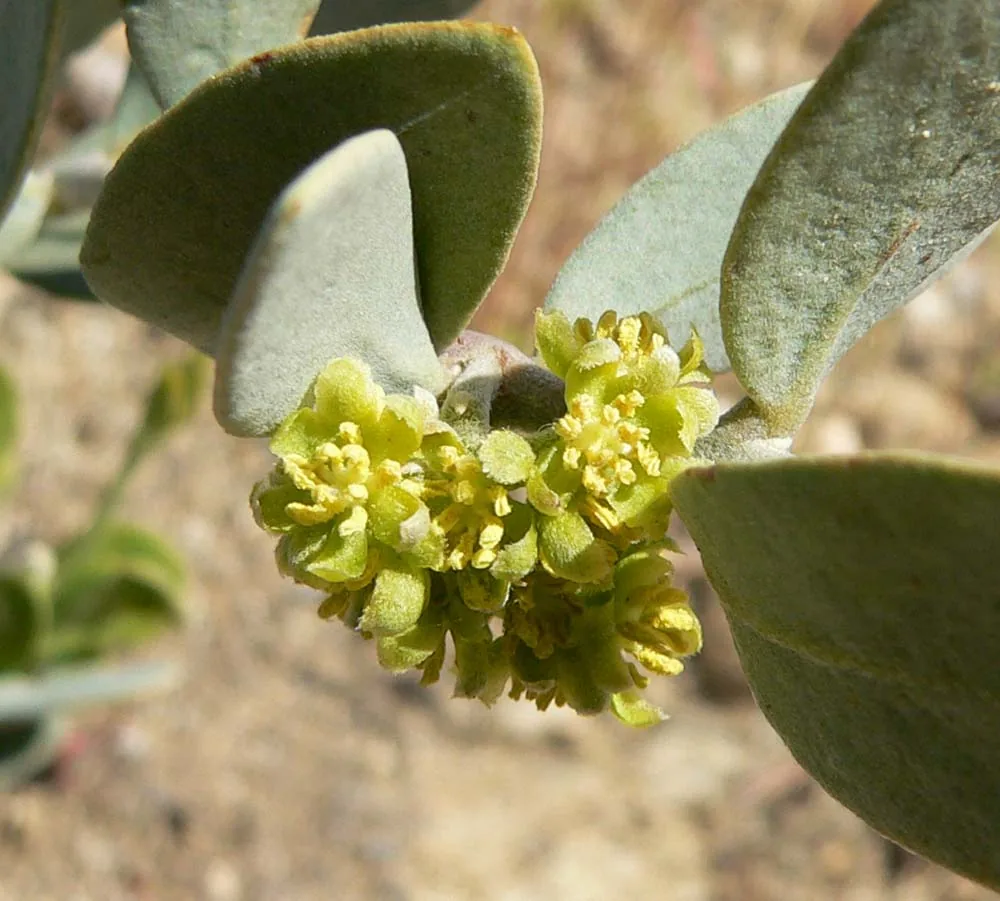
Jojoba is an evergreen desert shrub from the southwestern United States and northwestern Mexico, bearing thick gray-green leaves and acorn-like nuts filled with liquid wax prized for cosmetics and lubricants. Plants range from mounding 3-foot dwarfs to 10-foot vase-shaped shrubs depending on genetics and moisture. In subtropical and tropical Americas jojoba is a specialty dry-border species—humid, poorly drained yards kill it politely; Puerto Rico’s rain-shadow south slopes and Florida’s well-drained coastal scrub mimics are more honest homes. Dioecious males and females require both for seed production; plan spacing for airflow to limit foliar pathogens. Full sun for dense wax production and compact growth. Excellent drainage mandatory; coarse sand, gravel, or raised mounds on flat sites. Deep, infrequent irrigation during establishment; mature plants are extremely drought-tolerant. Seeds need warm soil; germination is slow—patience and rodent protection matter. Semi-hardwood cuttings rooted under mist for known female/male clones. Field graft female scions onto seedling rootstocks in commercial-style plantings. Harvest nuts when capsules yellow and split; dry before processing wax. Light pruning after harvest shapes plants and removes crossing wood for better spray coverage if needed.
Permaculture Functions
- Edible: Simmondsia chinensis seeds are half liquid wax esters, not triglyceride oil -- cold-press for cosmetic-grade lubricants and soaps; do not plan on calories because human guts do not run on jojoba wax.
- Border Plant: Gray evergreen foliage and vase-shaped habit read tidy along dry fences where thorny plants are unwelcome -- space males and females if you want nut crops for pressing.
- Erosion Control: Deep lateral roots bind desert berms and highway cuts where shallow annuals die -- mulch young plants against rodent girdling until bark lignifies.
- Windbreaker: Staggered rows filter abrasive wind across citrus and vegetable rows in arid valleys -- combine with taller legume windbreaks because jojoba alone stops ground-level flow, not storm fetch aloft.
Companion Planting
- Tamarisk
- Russian Olive
Threats & Pressure