About
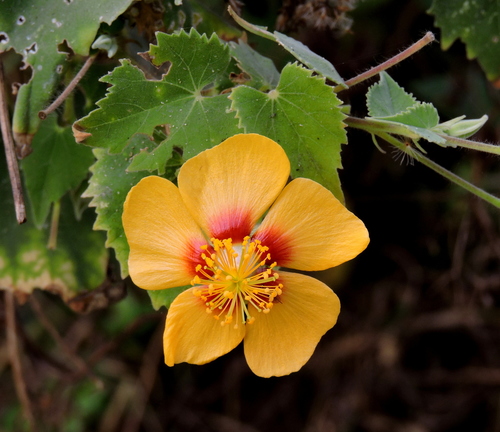
Indian mallow (Abutilon theophrasti), better known as velvetleaf, is a warm-season annual malvaceous weed of row crops and disturbed ground across much of North America after centuries of accidental introduction from Asia. Heart-shaped softly hairy leaves and yellow-orange flowers give it away; seeds persist in soil seed banks like grudges. Fiber traditions exist in its native range—here it is mostly an agricultural antagonist and a case study in seed longevity. Mentioning it in permaculture is honest only if the word 'invasive' leads the sentence. ☀️💧 Sun and Water Requirements: Full sun; thrives in fertile, moist agricultural soils—exactly where you do not want it competing with cash crops. Tolerates heat and moderate drought once established but grows largest with irrigation and nitrogen. Shade suppresses it; dense living mulches reduce seedling success better than speeches. ✂️ Propagation: Accidental—seeds shatter near parent plants and ride equipment between fields. To reduce spread, mow or pull before seed set; compost hot piles to kill seeds if feasible. 🌾 Harvest / Best Use Timing: Fiber trials harvest stems at bloom to early seed for retting experiments—wear gloves; hairs irritate skin. Do not promote seed production near farms or natural areas.
Permaculture Functions
- Fiber: Stems yield coarse fiber in traditional processing—niche craft trials, not industrial salvation.
- Edible: Seeds are eaten in some cultures after careful processing—misidentification risk is high; not a beginner forage.
- Wildlife Attractor: Flowers feed generalist pollinators in disturbed habitats—value does not erase weed status in cropland.
- Dynamic Accumulator: Fast growth pulls nutrients from rich soils—use pulled plants as compost feedstock, not ideology.
Practitioner Notes
- Velvety leaves feel like suede—if it is sticky-hairy and smells like a malvaceous cousin, slow down and ID.
- Seeds survive decades in soil—one year's silence does not mean victory.
- Combine settings that throw seed are velvetleaf distribution conspiracies—clean equipment like adults.
- Fiber nerds exist; farmers also exist—context decides whether this plant is craft material or invoice line item.
Companion Planting
- Field Corn — classic unwanted pairing in industrial agriculture; manage velvetleaf before it steals canopy light
- Soybean — legume rows suffer yield loss when Abutilon establishes; rotary hoe timing matters
- Winter Wheat — fall-sown grains can suppress some spring germination windows with early canopy closure
- Major agricultural weed — do not introduce; learn recognition to prevent seed spread on tools, manure, and compost feedstocks
Pest Pressure