About
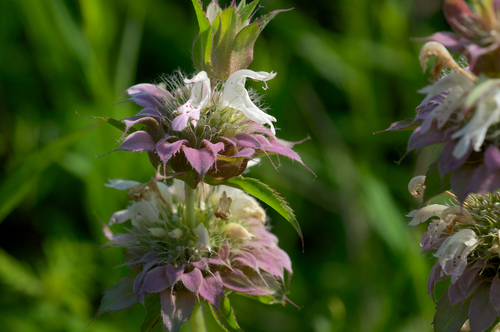
Horsemint (Monarda punctata) is an aromatic mint-family perennial of prairies, sandy openings, and coastal grasslands in eastern and central North America, with stacked yellow flowers spotted in purple and foliage rich in thymol-scented oils. It is a long-tongued bee and wasp magnet—less showy than scarlet Monarda didyma but arguably louder to insects wearing antennae. Use it in meadow strips, pollinator hedges, and rain-garden berms with sharp drainage; heavy clay wetness rots crowns like most monardas. ☀️💧 Sun and Water Requirements: Full sun; lean, well-drained soils produce oil-rich, upright plants. Moderate moisture improves bloom; drought tolerance is fair once established but extreme dry spells shorten flowering. Avoid wet winter crowns in heavy soil—raise beds or amend with gravel and organic matter. Cold-hardy into northern temperate zones; humid heat suits its natural range. ✂️ Propagation: Seeds benefit from cold stratification; sow in fall outdoors or refrigerate moist seed. Soft tip cuttings under humidity root in warm months. 🌾 Harvest / Best Use Timing: Cut flowering tops for drying when most florets are open but before browning; hang with airflow to prevent mold. Leave late stems for seed-eating birds where meadows are managed for wildlife.
Permaculture Functions
- Pollinator: Spotted whorls attract specialist bees, wasps, and butterflies adapted to aromatic mint flowers.
- Medicinal: Aromatic oils are used in trained herbal practice for topical and respiratory traditions—dosage is specialist work.
- Wildlife Attractor: Seeds and structure feed birds and insects in open habitats.
- Border Plant: Vertical tiers of yellow blooms add rhythm to sunny perennial polycultures.
Practitioner Notes
- Thymol scent hits before you see flowers—if it smells like oregano on steroids, you are close.
- Powdery mildew visits monardas in still air—widen spacing and prune for breeze before you spray folklore.
- Stacked whorls are ID gold; flat pastel cultivar cousins are different social circles.
- Drought plus rich irrigation swing oil chemistry—samples vary year to year like weather gossip.
Companion Planting
- Little Bluestem — warm-season grass matrix supports Monarda stems against wind flop
- Purple Coneflower — overlapping bloom supports pollinators across mid-summer
- Butterfly Milkweed — orange milkweed pairs with yellow horsemint for monarch and bee synergy
- Similar appearance to other Monarda when not in bloom—verify spotted yellow tiers before harvesting for medicine