About
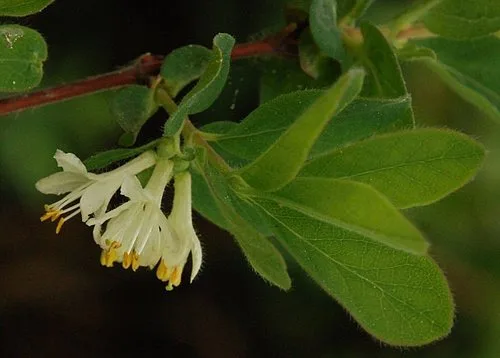
Honeyberry (Lonicera caerulea) is a useful perennial species in the Caprifoliaceae family, native or long-naturalized across parts of the Americas and Eurasia depending on lineage. Mature growth is typically a shrub form suited to layered guilds, with reliable productivity when site conditions match its ecology. In a permaculture system it contributes food, habitat, and system resilience rather than single-crop output. Best performance comes with full sun to light partial shade, depending on heat intensity. Keep soil moisture steady during establishment, then water by seasonal demand. Well-drained fertile soil works for most upland entries, while wetland species require saturated margins. Most growth accelerates between 45°F (7°C) and 70°F (21°C), with stress rising near 85°F (29°C). Direct seeding is the simplest method where climate allows; sow at the start of the local favorable season and keep the seed zone evenly moist through germination. A second pathway is transplanting nursery starts or divisions once roots are active and temperatures are stable. Woody entries can also be established from dormant bare-root stock or grafted material for cultivar reliability. Harvest edible portions at peak maturity for intended use: leafy crops before heat stress, fruiting types at full color, root crops after starch set, and nuts or grains once fully mature and dry. For ecological functions, the strongest value appears after canopy closure, flowering, and annual residue cycling, when soil cover and habitat effects become consistent.
Permaculture Functions
- Edible: Lonicera caerulea fruits elongate into blue haskap berries with kiwi-meets-blueberry flavor -- pick when the skin dulls and the flesh yields; unripe fruit stays tart enough to pucker fence posts.
- Pollinator: Early tubular flowers open while apples are still tight bud, giving honeybees and bumblebees pollen in cool soil -- plant two compatible clones for cross-pollination because singles often set light crops.
- Wildlife Attractor: Soft fruit draws robins and chipmunks the week humans blink -- net rows or harvest slightly underripe for jam if you want human share in short-season districts.
Companion Planting
No companion data yet.
- Black Walnut - juglone exposure can reduce shrub vigor over time.
- Currant - similar chill requirement and early pollination window.
- Comfrey - mulch production and moisture buffering at shrub base.
- Chive - may help suppress fungal issues and uses similar spacing.
Threats & Pressure