About
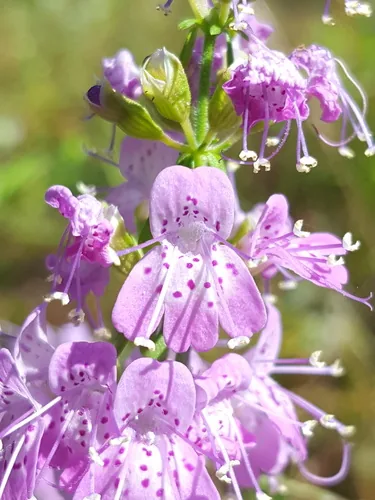
Florida mint (Dicerandra densiflora) is a rare, aromatic mint-family perennial endemic to well-drained sandy ridges in parts of the southeastern United States, with tubular flowers that read as a shout-out to specialist bee pollinators. The genus Dicerandra is famous for oil glands and narrow endemism—this is not supermarket Mentha, and wild collection can harm fragile populations. In cultivation, use nursery-propagated material for native plant gardens, bee borders, and sensory paths where sharp drainage is real and irrigation is restrained. Full sun; demands excellent drainage on sandy or gravelly soils. Drought-tolerant once established; hates wet winter crowns in heavy clay. Warm nights suit its subtropical genetics; hard freezes can kill marginally protected plants—mulch crowns lightly after establishment. Avoid rich, constantly moist beds that turn lamiaceous roots to paste. Softwood cuttings root under humidity with warmth—clone nursery stock rather than wild-digging. Seeds (when ethically available) sow on well-drained mix; germination can be slow. Harvest small amounts of leafy tips for aromatic trials when plants are vigorous; never strip rare wild stands. Cut back after flowering to encourage bushy growth in garden settings.
Permaculture Functions
- Pollinator: Dicerandra densiflora narrow orange tubes map onto specialist native bee morphology on sand ridges -- where fire-return timing sets bloom windows nursery-propagated clones extend without wild-digging protected populations.
- Ornamental: Dense spikes of mint-family flowers contrast silver narrow leaves on drain-field-sharp sandy berms in zone 8b-11 rock gardens -- where irrigation stays restrained enough to keep lamiaceous crowns from winter rot.
- Wildlife Attractor: Rare wild populations still host bee-fidelity guilds ethical garden clones can support -- when you never harvest from conservation tracts and you cluster patches three feet wide so cruising pollinators notice volume.
- Medicinal: Pulegone-class oils drove regional aromatic trade -- internal use stays with licensed practitioners because narrow endemic ethics outweigh kitchen tea confidence on every internet recipe card you almost clicked.
Companion Planting
- Many Dicerandra species are legally and ecologically sensitive—never harvest or transplant from wild populations without permits and local expertise
Threats & Pressure