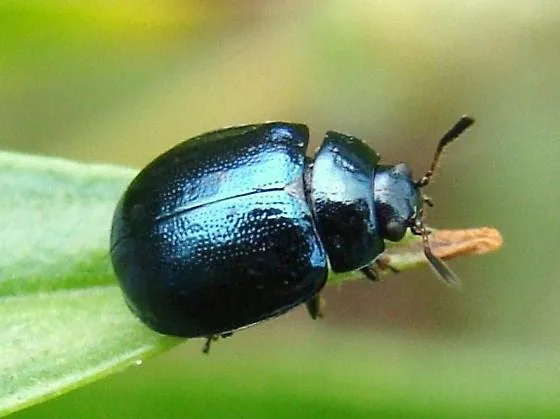
Field Identification
If new growth is curling, yellowing, sticky, or chewed, willow beetles may already be on the plant. This pest often builds quietly, then damage appears all at once. Feeding stress weakens growth, reduces yield, and opens the door to secondary disease. Early cleanup is much easier than fighting a full population surge later.
Inspect the newest growth first: leaf undersides, flower buds, stem joints, and tender tips where pests gather. Look for body shape, color, eggs, cast skins, honeydew, webbing, or fresh puncture marks. A hand lens and a white paper tap test help reveal small life stages. Matching visible pests with fresh plant damage confirms active infestation.
Not sure what you have? Use the symptom diagnosis tool →
How to Deal With It
Organic Control Methods
Birds, parasitic wasps, and predatory ground beetles eat willow leaf beetle larvae and adults when larvae feed openly on leaves -- they fail once larvae tuck under rolled leaves. Spiders snag adults along waterways. Avoid aerial pyrethrin over entire riparian strips; you kill predators and beetles return on the next warm night.
Scout willows weekly from leaf-out for skeletonized patches and shiny adults on undersides -- early colonies are easier than whole-tree defoliation. Flag trees that browned last year; larvae often reinfest the same clones. Check nursery stock before planting riparian buffers; beetles ride in on liners.
Prune and remove heavily infested branches when damage is still localized; chip or burn debris per local rules. Rake dense leaf litter under specimen trees if it holds overwintering adults in wet piles. Keep soil moisture even; drought-stressed willows show damage faster.
Sticky traps on trunks catch some adults for monitoring; manual removal on small trees means shaking branches over a sheet in cool mornings. For backyard willows, a hard water blast knocks larvae off before they roll leaves -- repeat every few days during outbreaks.
Neem oil or insecticidal soap contacts larvae and adults on leaf surfaces -- spray undersides thoroughly. Bacillus thuringiensis works on small beetle larvae that ingest it; ID the species before assuming Bt. Spray at dusk to spare pollinators on catkins. Reapply after rain; short residual means timing beats brand.
Let Nature Handle It
Natural Enemies
- Birds
- Parasitic Wasps
- Predatory Beetles