About
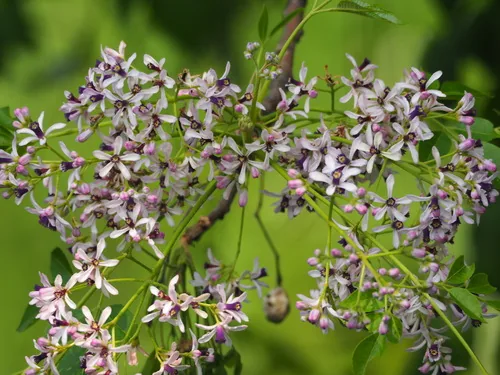
Chinaberry (Melia azedarach) is a fast-growing deciduous tree native to Asia, widely naturalized in warm-temperate to subtropical regions, with bipinnate leaves, lilac-like spring flowers, and yellow drupes containing seeds historically used for beads—toxic if eaten casually. Heights of 30–50 feet (9–15 m) are common with a spreading crown. It is listed invasive in multiple areas and can displace natives along roadsides; this profile supports identification and management literacy, not encouragement where ecology is already paying the bill. Full sun for dense canopy; tolerates drought and poor soils once established, which partly explains its weediness. Occasional deep watering speeds early growth; over-irrigation on heavy clay can stress roots without stopping spread ambition. Spreads abundantly by seed; cutting and grinding stumps are common control tactics where regulated. If managing legacy trees, remove flowers or fruit before seed maturation to reduce recruitment. Do not forage drupes for food—toxicity is documented. Bead craft from hardened seeds is historical but secondary to ecological responsibility; prioritize preventing spread.
Permaculture Functions
- Ornamental: Lilac-scented spring panicles and airy bipinnate leaves gave this Melia street-tree presence -- before modern weed lists caught up with its seed rain.
- Shade Provider: Fast, wide-spreading crown throws deep summer shade over driveways, barnyards, and poultry runs -- where legacy trees already stand.
- Wildlife Attractor: Nectar supports generalist pollinators -- while yellow drupes feed birds that also plant new trees along fence lines unless fruit is removed.
- Mulcher: Heavy leaf fall smothers weedy understory and returns minerals to the surface -- if you rake litter into beds you control.
- Border Plant: Old shelterbelt rows still mark field edges and screen dust -- until slower native replacements size up.
Companion Planting
- Toxic fruit and plant parts — keep away from curious livestock and children
- Invasive regulation — verify local weed status before planting, selling, or moving seed
Threats & Pressure