About
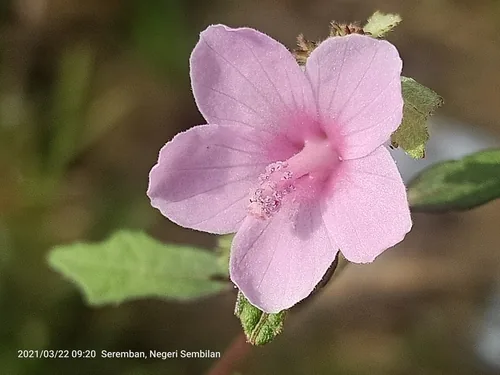
Caesarweed (Urena lobata) is a fast-growing malvaceous weed or fiber crop of tropical and subtropical regions worldwide, naturalized in parts of the Americas on roadsides, pastures, and disturbed ground. Plants are bushy annuals or short-lived perennials roughly 3–6 feet (1–2 m) with pinkish flowers and dry burr-like fruits that cling to clothing and livestock. It has industrial fiber history in some countries; in permaculture contexts treat it as a biomass or disturbance indicator, not a default polyculture partner. Full sun; tolerates poor soils and seasonal drought once established. Responds strongly to fertility and moisture—irrigated ditch banks can explode into impenetrable thickets. Avoid introducing where regional biosecurity lists flag it. Usually arrives by seed on equipment, animals, or flood debris. If researching fiber lines, direct-sow warm soil after last frost in frost pockets. Remove plants before burr set to reduce seedbank pressure. Fiber harvest requires retting knowledge beyond casual gardening—most growers focus on control. For biomass, cut before mature burrs form; compost hot if seeds are present. Repeat cuts through the wet season to exhaust root reserves on annual forms.
Permaculture Functions
- Fiber: stem bast yields malvaceous fiber for cordage and rough textiles after retting and scraping steps -- that differ from casual garden composting.
- Biomass: grows fast enough on roadsides and pastures to cut whole plants into compost -- when stems are still soft and before burrs mature.
- Dynamic Accumulator: mines disturbed ground quickly, moving nutrients into leafy stems -- that can be chipped off-site after a chop cycle instead of letting seedbanks thicken.
- Animal Fodder: Livestock sometimes graze young Urena lobata before stems stiffen -- mature plants turn woody and bristly, so fodder value is a narrow early-season window.
Companion Planting
Also mentioned as companions:
- Guinea Grass
Not yet profiled in PermiePortal
- Invasive potential — listed or problematic in parts of the subtropical United States and Caribbean basin
- Burr hitchhiking — spreads on livestock, clothing, and machinery
- Skin irritation — some people react to malvaceous hairs; gloves for heavy pulling
Threats & Pressure