About
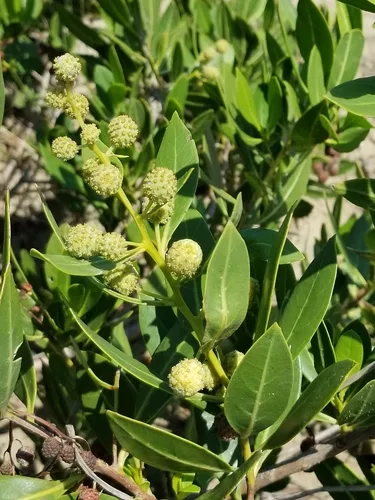
Buttonwood (Conocarpus erectus) is a salt-tolerant coastal tree of tropical and subtropical shorelines, bearing leathery, oblong leaves and small, inconspicuous flowers in spikes that mature into reddish-brown cone-like fruit heads. In open sun it forms a broad, rounded canopy often 6 to 12 meters (20 to 40 feet) tall, while wind-sheared coastal plants stay lower and wider. Silver-leaf selections are widely planted as ornamentals. It anchors beachfront windbreaks, parking lot islands, and brackish swale plantings across the Caribbean, Gulf, and similar climates worldwide. Full sun maximizes density; it tolerates periodic salt spray and brackish water tables but not prolonged root drowning without aeration. Sandy or limestone soils suit it best. Start from container nursery stock for uniform form, or direct-seed in warm, moist weather on site. Protect young plants from cold snaps below about 30°F (-1°C). Prune for clearance along walkways; avoid topping mature trunks because decay can follow large cuts in humid climates.
Permaculture Functions
- Erosion Control: Surface roots spread widely in sand and shell -- stabilizes dunes and canal banks where few broadleaf trees survive salt exposure.
- Windbreaker: Dense foliage reduces wind speed for understory seagrape and herb layers -- place on seaward edges with setbacks for hurricane debris shedding.
- Wildlife Attractor: Flowers feed small pollinators; dense canopy shelters roosting birds -- combine with fruiting shrubs landward for complete habitat verticality.
- Ornamental: Dark green or silver foliage reads clean in urban coastal plantings -- tolerates reflected heat from pavement when irrigated during establishment.
- Shade Provider: Broad crown cools patios and parking rows -- reduces radiant load on adjacent buildings compared to bare asphalt alone.
Companion Planting
Threats & Pressure