About
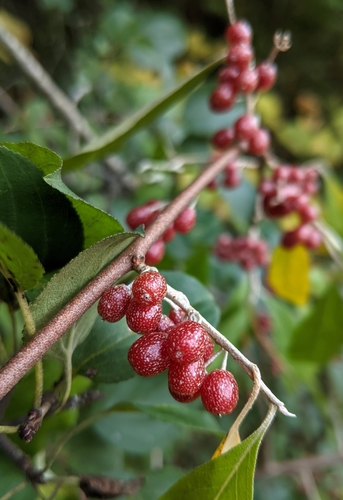
Seedless or low-seed cultivars of autumn olive (Elaeagnus umbellata) were marketed to reduce bird-spread risk while keeping silvery foliage, fragrant flowers, and tart fruit on some lines. The species remains widely invasive in many temperate regions; seedlessness does not erase suckering, legacy seed banks, or ecological history. Treat this entry as cultivar-aware identification: verify local legality and non-native plant guidance before any new planting, regardless of catalog adjectives. ☀️💧 Sun and Water Requirements: Full sun to light partial shade; drought-tolerant on lean soils once established. Avoid wet, airless sites that favor root rots on stressed transplants. Irrigation during establishment should taper so plants harden off rather than producing floppy extension growth. ✂️ Propagation: Nurseries historically used cuttings and budding; home propagation can still create unwanted spread if material escapes management. Prefer buying from regulated channels where legal, and avoid sharing unnamed clones across regions. Renewal prune old wood after bloom to keep habit dense where hedges are intentional. 🌾 Harvest / Best Use Timing: Where fruit is produced, pick at full color for processing; low-seed lines still demand kitchen use plans. If managing out legacy plants, remove flowers or young fruit when local control protocols call for cutting reproductive output.
Permaculture Functions
- Edible: Fruit on some cultivars supports preserves where legal harvest aligns with land ethics.
- Nitrogen Fixer: Actinorhizal roots enrich associated soil on sites already committed to the species.
- Ornamental: Silvery foliage and scented flowers earn their keep only where invasive risk is absent or managed.
- Windbreaker: Twiggery slows wind along old fencerows and building margins.
- Wildlife Attractor: Flowers still feed insects; consider regional guidance on feeding birds versus seed rain.
Practitioner Notes
- Verify cultivar names on tags—generic autumn olive sold as special is a classic nursery typo comedy.
- Seedless does not mean bird-proof if any viable seed remains; monitor volunteers near fences.
- Heavy mulch over suckers beats ignoring them until they become a hedge coup.
- Replace with regionally appropriate natives on sensitive sites; virtue is in the swap, not the sermon.
Companion Planting
- Goumi — alternative Elaeagnus-family shrub for growers choosing less problematic replacements
- Yarrow — dry-edge forb tolerates shrub root competition and pulls pollinators to the border
- Raspberry — common legacy neighbor; separate canes from shrub bases to reduce humidity rots
- Invasive species listings — legality and land-manager rules may ban sales and plantings regardless of cultivar claims
- Suckering from roots — seedless marketing does not mean non-spreading clones in all soils
Pest Pressure