About
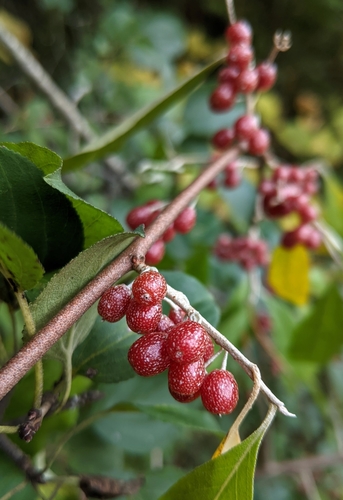
Autumn berry is the fruiting face of autumn olive (Elaeagnus umbellata), a fast, thorny nitrogen-fixing shrub with silvery leaves, sweet spring scent, and speckled red berries high in lycopene. It spreads aggressively in many temperate regions via bird-dropped seed and suckers, outcompeting native shrubs on disturbed ground. This profile is for identification and legacy-site management—not a planting endorsement where the species is invasive. If you already have it, harvest and disturbance strategy matter more than Instagram recipes. ☀️💧 Sun and Water Requirements: Full sun to light shade; tolerates drought, sand, and lean soil once actinorhizal roots establish. Avoid encouraging new plantings near natural areas, wetlands, or conservation corridors. Over-fertility speeds rank growth and heavy fruit loads that amplify seed rain. ✂️ Propagation: Technically hardwood cuttings and suckers root easily—which is why it became a problem. Do not distribute seed or cuttings in regions where the species is regulated. On managed sites, remove fruiting wood after harvest if local guidance recommends reducing spread pressure. 🌾 Harvest / Best Use Timing: Pick berries when fully red-speckled and slightly soft; they are tart raw and shine in jams, fruit leathers, and fermented experiments. Strip plants you are phasing out before birds move seed into fence lines and neighbor drama.
Permaculture Functions
- Edible: Berries process into high-acid preserves where harvest does not increase regional spread.
- Nitrogen Fixer: Actinorhizal roots add nitrogen to associated soil on sites where the plant already exists.
- Wildlife Attractor: Flowers feed insects; fruit feeds birds—understand that feeding includes seed dispersal.
- Windbreaker: Dense twiggy habit slows wind along old hedgerows and field edges.
- Animal Fodder: Fruit and browse can feed poultry or livestock in systems already managing the plant.
Practitioner Notes
- Fruit removal is population control, not just pantry filling—every berry left is a lobbying packet for birds.
- Lycopene content is real; ecological cost is also real—keep both facts in the same sentence.
- Sweetness spikes after light frost in some climates; flavor still will not excuse new introductions.
- Thorns reward casual pruning; gloves are cheaper than tetanus paperwork.
Companion Planting
- Goumi — related Elaeagnus relative sometimes used where non-invasive options are chosen instead
- Raspberry — legacy polyculture edge in old homesteads; manage both for bramble airflow
- Sunflower — tall annual marks rows during conversion plantings without pretending autumn berry is innocent
- Regional invasive regulation — check local lists before moving plants, seed, or soil with root fragments
- Conservation land edges — fruiting shrubs seed into adjacent native communities with bird assistance
Pest Pressure