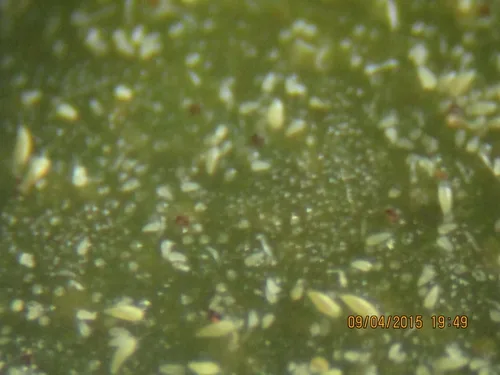
Field Identification
Russet mites are microscopic eriophyids that rasp epidermal cells, causing bronze or russeted leaves, stem corking, and reduced photosynthesis on tomatoes, peppers, cannabis, citrus, and many other hosts. They hide along leaf midribs and meristems where sprays miss. Hot dry weather speeds reproduction. Damage is often blamed on thrips or disease until a lens or lab confirms mites.
Use at least 15x magnification and side lighting -- mites are elongate and yellow compared with round spider mites. Look for folding or brittleness at growing points. Sticky cards rarely catch them well -- scout tissue directly. Compare with broad mite damage which can look similar on some hosts but differs in microhabitat preference.
Not sure what you have? Use the symptom diagnosis tool →
How to Deal With It
Organic Control Methods
Amblyseius and Neoseiulus predatory mites consume eriophyids when humidity allows establishment in greenhouses. Typhlodromalus pyri occurs on perennial hosts in orchards. Avoid incompatible sprays that kill predators while russet mites rebound faster. Banker plants with grain mites support some predator systems in professional houses.
Quarantine new seedlings and inspect meristems under magnification. Screen vents with fine mesh where feasible. Avoid carrying mites on clothing between infested and clean bays. Reduce dust that interferes with predator movement.
Remove and bag the most damaged terminal growth on small plants to lower starting population -- do not compost. Lower nitrogen slightly if growth is ultra-succulent during outbreaks. Increase humidity briefly in greenhouses only when disease risk from humidity is acceptable for your crop mix.
High-pressure water rinse dislodges some mites from sturdy tomato plants when done daily for several days. For houseplants, isolate and prune. Replace grossly infested mother stock in propagation instead of fighting forever.
Sulfur is effective on many eriophyids when temperatures stay below label maxima -- never combine sulfur with oil within the label window. Horticultural oils at summer rates help on some hosts when coverage reaches folded leaves. Neem and soap have mixed efficacy -- rotate and time applications before populations peak at meristems.
Let Nature Handle It
Natural Enemies
- Predatory Mites
- Minute Pirate Bugs
- Lacewings