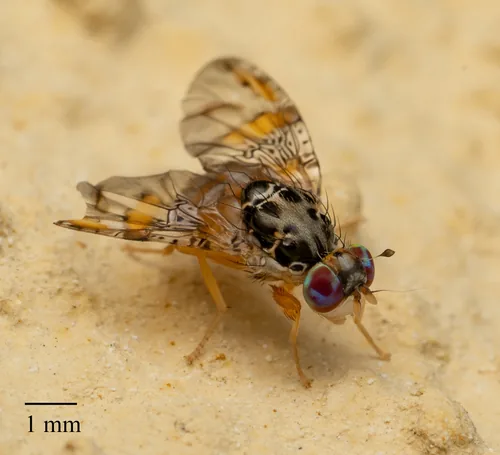
Field Identification
If leaves show trails, fruit turns soft, or roots collapse from inside, mediterranean fruit fly may already be feeding. The larval stage does most of the damage, often hidden where you cannot see it at first glance. By the time yellowing or rot appears, feeding may be well underway. Move quickly when symptoms begin to prevent another wave of eggs and larvae.
Watch for tiny eggs near plant tissue, pale legless larvae inside mines or fruit, and sudden soft spots or tunnels. Adults are usually small flies that hover or dart when disturbed. Check around wounds, blossoms, and moist plant debris where egg-laying is common. Cut open suspect tissue: live maggots or fresh tunnels are the clearest field confirmation.
Not sure what you have? Use the symptom diagnosis tool →
How to Deal With It
Organic Control Methods
Psyttalia concolor and Diachasmimorpha wasps parasitize medfly larvae in fruit in classical programs -- not a backyard hobby release. Native parasitoids help when sanitation is strong and broad sprays stay rare. Preserve locals by using bait-focused tactics that target feeding flies, not entire canopies.
Hang Jackson traps and regional monitoring lures early -- legal restrictions on moving homegrown fruit from quarantine zones exist for good reason. Educate neighbors about larvae hitchhiking in fruit; one forgotten bucket can seed a block. Coordinate with agriculture agencies when programs require reporting.
Pick up fallen fruit daily during fly season; larvae complete in ground drops. Remove unmanaged hosts in abandoned orchards that act as reservoirs. Neighborhood cleanup beats solo heroics; Medfly does not respect fence lines. After harvest, strip trees of lingering fruit.
Bag individual fruit clusters where labor allows -- excludes females from stinging. Heat or cold treatment of fruit for trade follows certified protocols, not kitchen experiments. Trapping for monitoring guides regional responses; one trap does not clear a county.
Bait sprays mix protein lure with spinosad or other approved actives on spot trees or alternate rows -- attracts and kills searching females and males without fogging entire canopy. Reapply per regional program after rain. Follow label distances from water and bee forage. Bait sprays are not a substitute for fruit removal.
Let Nature Handle It
Natural Enemies
- Psyttalia concolor
- Diachasmimorpha tryoni
- Diachasmimorpha longicaudata