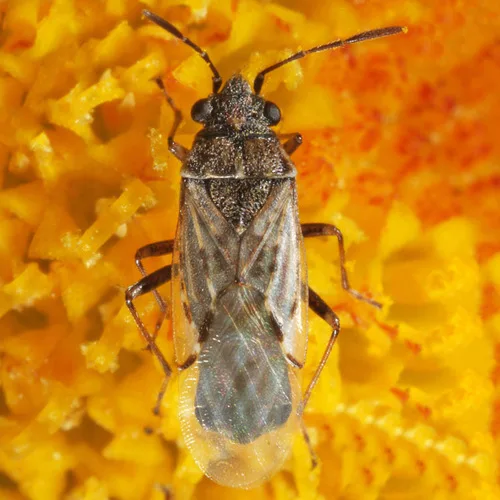
Field Identification
Chinch bugs are small true bugs that pierce grass blades and inject enzymes that disrupt water movement. Damage shows as spreading yellow or brown patches in sunniest parts of lawns, often mistaken for drought. Hot dry weather accelerates injury while populations can still be active where thatch stays humid. They occur on many turfgrass species across temperate North America and similar climates.
Part adults along the midrib of stolons near the soil surface -- early instars are red with a pale band and later instars darken. A soap flush forces nymphs to the surface for counting. Use a white sheet to beat grass over the edge of a hot spot. Southern chinch bug is a separate entry for St. Augustinegrass specialists, but Blissus spp. share similar management themes on other grasses.
Not sure what you have? Use the symptom diagnosis tool →
How to Deal With It
Organic Control Methods
Big-eyed bugs (Geocoris spp.) and minute pirate bugs (Orius spp.) prey on chinch nymphs when present in unsprayed lawns. Beauveria bassiana applications can reduce nymphs if humidity stays high enough for spore germination. Preserve flowering weeds at low density in outlying areas to feed predators, while still mowing seed heads you do not want spreading into beds.
Reduce excessive thatch with dethatching or core aeration so nymphs have fewer humid refuges. Avoid over-fertilizing with soluble nitrogen that pushes lush growth chinch favors. Irrigate deeply and less often to encourage deep roots that outgrow localized feeding scars. Reseed with improved cultivars known for better chinch tolerance where breeding programs exist for your grass species.
Raise mowing height during peak heat to reduce plant stress stacked on top of chinch feeding. Remove tree limbs that shade only half the lawn unevenly if that creates moisture islands in thatch. Spot-check south-facing slopes weekly during drought because that is where patches start. Do not spread clippings from infested areas onto clean lawns during active outbreaks.
Vacuuming lawn edges is not practical, but vigorous watering can dislodge nymphs briefly and helps drought-stressed grass recover while other controls work. For tiny lawns, hand removal of thatch plugs with heavy infestation zones can lower harborage. Resod badly damaged areas only after you have a management plan or reinfestation is likely.
Soaps labeled for lawn use can kill nymphs on contact when coverage reaches the crown zone. Neem and essential oil trials show mixed results and may stress turf in heat -- test patches first. Repeat applications are usually needed because contact products miss insects deep in thatch. Always follow label temperature limits to avoid phytotoxicity.
Let Nature Handle It
Natural Enemies
- Minute Pirate Bugs
- Spiders
- Ground Beetles
Threat Map