About
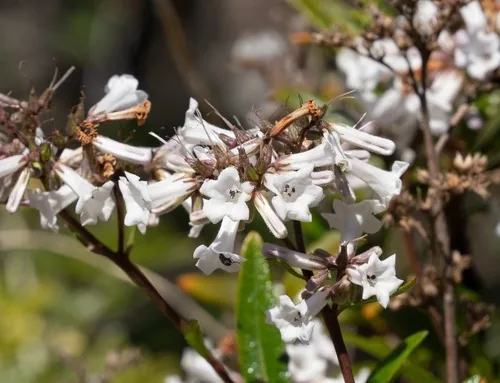
Yerba santa (Eriodictyon californicum) is an evergreen California chaparral shrub with lance-shaped, sticky-resinous leaves and clusters of white to pale lavender flowers attractive to native pollinators. Plants typically reach 1–2 m (3–6 ft), forming stiff mounds on slopes and road cuts. Traditional medicinal use is well documented in western herbal histories; modern use belongs with trained practitioners. In subtropical and tropical Americas it is not native—grow only if you can mimic Mediterranean-dry summers and excellent drainage; humid wet season without dry-down invites decline. Full sun for compact resin production; part shade acceptable in hottest deserts. Very well-drained soil; drought-tolerant once established—think gravel mulch, not lawn sprinklers. Reduce summer irrigation after establishment to mimic native dry season. Sow seed in fall; smoke treatment sometimes improves germination in fire-adapted chaparral species. Semi-hardwood cuttings in late summer with bottom heat and low humidity around leaves. Layer pliant stems where they touch mineral soil on slopes. Harvest leafy stems for drying before intense mid-summer stress if cultivating for traditional preparations—follow ethical wildcrafting principles even in garden stock. Leave flowers for pollinators during peak bloom; prune lightly for shape after flowering.
Permaculture Functions
- Medicinal: Eriodictyon californicum leaves are sticky with resinous aromatics used in Western herbalism for respiratory support -- harvest from garden stock, not collapsing wild populations.
- Wildlife Attractor: White-pink bells feed specialist California bees -- plant in dry full sun where Mediterranean wet season does not rot crowns.
- Erosion Control: Mounding roots grip road cuts and chaparral slopes -- gravel mulch, not lawn sprinklers.
- Border Plant: Lanceolate leaves read silver-sticky along paths -- fragrance hits when sun warms resin.
Threats & Pressure