About
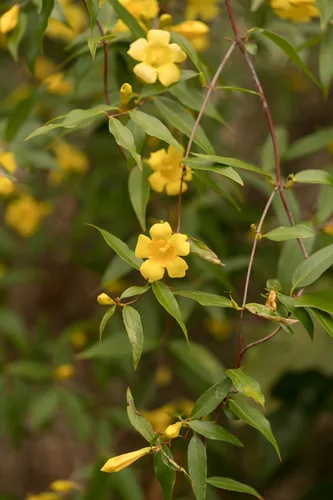
Yellow jessamine (Gelsemium sempervirens) is a twining evergreen vine of woods edges, fences, and streamside thickets in the humid subtropical Gulf–Atlantic coastal plain and related climates where winters stay mild. Fragrant yellow trumpet flowers open in late winter to spring, a beacon for early pollinators. All parts contain toxic alkaloids—beautiful, useful for trellises, and absolutely not a salad ingredient. Full sun to part shade; best flowering with morning sun and some afternoon relief in hottest zones. Average moisture with good drainage; tolerates brief dry spells once established. Mulch roots in marginal cold pockets; avoid salt spray saturation on foliage. Semi-hardwood cuttings in warm months root with humidity. Layer low stems to ground. Sow seed only if legally sourced and identified—slow and variable. Train on trellis; prune after main bloom to control size. Do not harvest for food. Cut flowers sparingly for indoor display with wash hands after; keep arrangements away from pets and kids. Prune to direct growth away from gutters and power equipment.
Permaculture Functions
- Ornamental: Gelsemium sempervirens pours fragrant yellow trumpets on glossy evergreen vines -- January--April show in Gulf Coast winters before most native vines wake.
- Wildlife Attractor: Early hummingbirds and bees work the tubes -- all plant parts carry toxic gelsemium alkaloids; keep away from livestock browse.
- Erosion Control: Twining stems knit wire mesh on cut banks faster than waiting for shrubs to root -- still needs training away from small tree trunks.
- Border Plant: Fence-top jessamine screens roads in one season -- annual hard prune after bloom keeps weight off posts.
Companion Planting
- All parts toxic to humans and many animals — do not plant where livestock browse or toddlers forage
- Misidentification with edible jasmines — common-name confusion can be medically dangerous
- Rapid growth on trees — can girdle small trunks if unmanaged—use posts and wires instead
Threats & Pressure