About
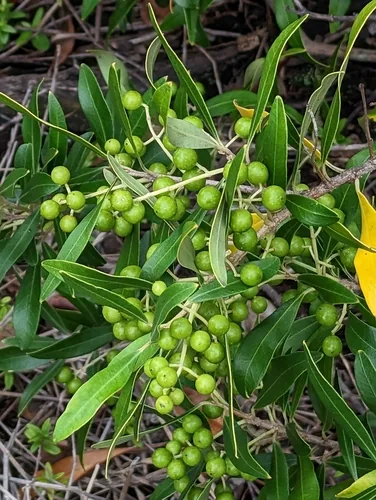
Wild olive (Osmanthus americanus) is a native southeastern evergreen shrub to small tree, unrelated to edible European olives but sharing a lean, dark-leaf dignity. It typically grows 3–7 m (10–23 ft), with opposite, leathery leaves and small creamy tubular flowers that perfume late winter to early spring—exact timing shifts with latitude. It belongs in naturalistic buffers, woodland edges, and wildlife hedges from parts of Florida through the coastal plain. Full sun to partial shade; afternoon shade reduces stress in hottest exposures. Average moisture; established plants tolerate short drought but look best with even rainfall. Well-drained acidic to neutral soils mirror its native hammocks and slopes. Semi-hardwood cuttings in late summer; keep humid until roots initiate. Layer low branches to soil and sever after rooting. Fresh seed sown promptly may germinate the following warm season; viability drops if seed dries carelessly. Not a food crop; ornamental and ecological value peak when flowering for early pollinators. Prune for structure after bloom if shaping is required—avoid heavy shearing into old wood without regrowth buds.
Permaculture Functions
- Wildlife Attractor: Osmanthus americanus creamy tubular flowers perfume January--March -- early Andrena bees work them when maples still sleep.
- Border Plant: Leathery opposite leaves shear into formal screens -- native alternative to cherry laurel on Gulf Coastal plain.
- Windbreaker: Multi-stem vase shape filters breezes at woodland edges -- not as dense as live oak but quieter than bare fence.
- Ornamental: Fragrance carries farther than the tiny flowers suggest -- plant near paths where winter walks need reward.
Companion Planting
Threats & Pressure