About
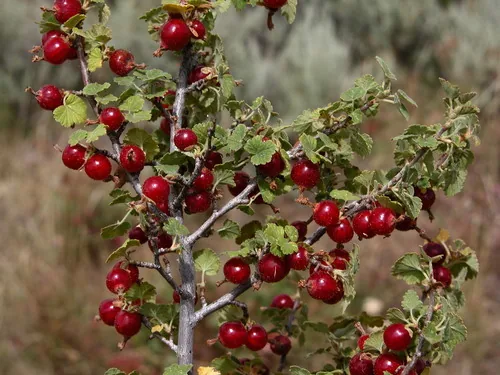
Wax currant (Ribes cereum) is a deciduous shrub of western North American foothills, canyons, and open coniferous woods, forming arching stems with lobed leaves and dangling clusters of tubular pink to white flowers followed by waxy, often palatable berries. It fruits in dry, cold-winter climates where many Ribes prefer more moisture, making it useful for xeric hedgerows and mountain food forests. Full sun to bright part shade; more sun in cool high elevations, more afternoon shade in hot low valleys. Drought-tolerant relative to other currants once established; prefers well-drained rocky or sandy loams. Avoid soggy heavy clay unless bermed. Sow cleaned seed after cold stratification; germination can be slow. Hardwood cuttings in late fall or dormant season. Layer low branches to start clumps on slopes. Pick berries when fully colored and slightly soft; flavor varies by population from insipid to tart-sweet. Use fresh, cook into jams, or dry like small raisins. Prune old canes after several years to renew fruiting wood.
Permaculture Functions
- Edible: Ribes cereum waxy currants range from bland to tart-sweet by population -- sample before committing gallons to jam; seeds are noticeable but edible.
- Wildlife Attractor: Tubular pink-white flowers target hummingbirds and hawkmoths -- waxy berries feed grouse and rodents along Intermountain slopes.
- Erosion Control: Arching stems layer on talus; adventitious roots grab gravel where irrigation is a fantasy -- classic dry canyon shrub.
- Ornamental: Lobed leaves and dangling racemes read delicate next to big sage -- spring bloom beats autumn foliage for garden merit.
Companion Planting
Also mentioned as companions:
- Big Sagebrush
Not yet profiled in PermiePortal
- White pine blister rust regulations — some areas restrict Ribes near white pines; check local rules before planting
- Thorns and spines — wear gloves when pruning older wood
Threats & Pressure