About
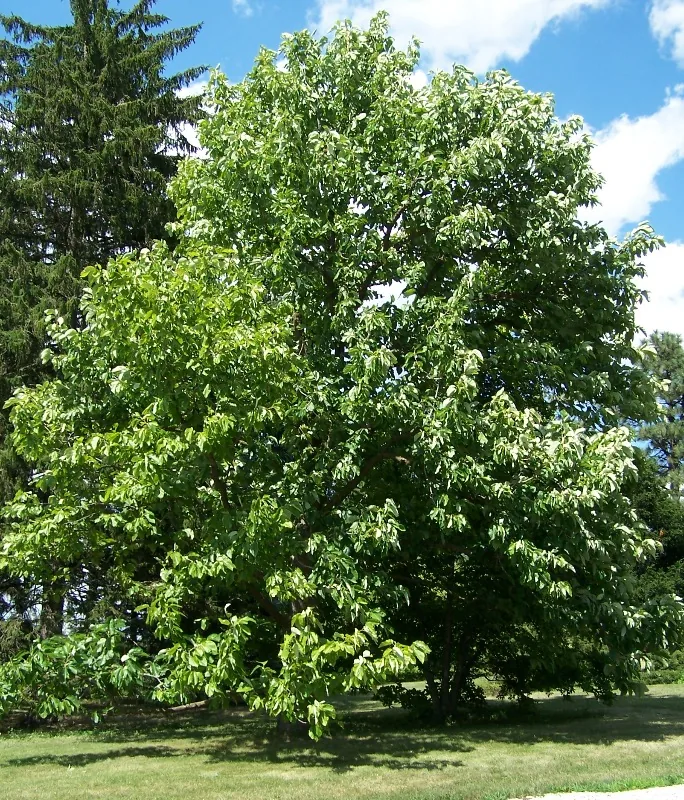
Umbrella magnolia (Magnolia tripetala) is a small deciduous tree of moist coves and lower slopes in eastern North America, famous for leaves up to 24 inches (60 cm) long clustered at branch tips like layered umbrellas. Creamy, slightly malodorous spring flowers target beetle pollinators; cone-like fruits show red seeds. It delivers instant jungle vibes in temperate food forests without needing tropical heat. Part shade to full shade understory conditions match its ecology; bright edge light prevents lanky growth. Consistently moist, rich, well-drained acidic soils are ideal; short droughts after establishment are tolerated in humid climates but not long dry baking. Mulch heavily to mimic forest floor. Sow fresh seed after removing red aril; never let seed desiccate fully. Grow young trees under light shade of nurse trees. Minimal pruning except removing damaged wood in late winter; large leaves scar visibly if trimmed in summer. Not a primary food plant; seeds are occasionally explored as a curiosity—prioritize wildlife use. Collect fallen leaves for massive mulch layers under acid-loving crops; timing is whenever drop begins in autumn.
Permaculture Functions
- Ornamental: Magnolia tripetala clusters 60 cm leaves at shoot tips like stacked umbrellas -- instant jungle architecture in eastern cove forests without importing true tropics.
- Wildlife Attractor: Fragrant, slightly rank spring blooms target beetle pollinators -- red-coated seeds feed small mammals and songbirds when cones split.
- Shade Provider: Huge deciduous leaves shade out spring ephemerals by June -- underplant trout lily and bloodroot for the narrow light window before the green ceiling closes.
- Mulcher: Leaf volume smothers weeds with acidic, slow mats -- rake toward acid-loving shrubs instead of fighting the natural mess.
Companion Planting
Also mentioned as companions:
- Christmas Fern
- American Ginseng
Not yet profiled in PermiePortal
- Wind exposure — large leaves shred on windy ridgetops without taller windbreaks
- Flower fragrance — some people find blooms unpleasant up close; site paths accordingly
Threats & Pressure